

This may take a moment to load. Why not fix yourself some steamy cocoa or ice-cold lemonade in the meantime?
Then you can settle in and peruse some of the best children's books available.
Non-Fiction
(including poetry, folk & fairy tales and adult interest)


 Delivering Justice : W.W. Law and the Fight for Civil Rights

Lucha Libre: The Man in the Silver Mask (A Bilingual Cuento) by Xavier Garza
published by Cinco Puntos Press
Readers get a ringside seat alongside Carlitos, who has been taken to the lucha libre wrestling match by his papa Lupe and Tio Vincente. But where is Tio Vincente? He is missing all of the action: the entrance of the villainous rudos, and the heroic tecnicos who will battle them, all of the characters wearing colorful and dramatic masks and costumes. Best of all is Carlitos' hero, the mysterious Man in the Silver Mask, and it turns out that Tio Vincente might have been closer to the action than Carlitos could ever guess. Garcia does an impressive job of capturing the excitement of a sporting event, but even more so, there is a lot of affection and respect for this high drama of the wrestling match lucha libre, emblematic of the battle between good and evil and containing a history as colorful as the masks. The narrative is told in English on one page with the Spanish translation on the other. The life of Salvador Lutteroth Gonzalez, the book's inspiration, is shared briefly in an author's note at the end, and will have you believing in superheroes. Check out the photographs of real lucha libre stars on the endpapers! Even folks who are not fans of professional wrestling will be drawn into this mysterious world. Believe me, you will have a hard time wrestling this picture book out of the hands of an active little boy. (6 and up)

 Sunny Boy: The Life and Times of a Tortoise
by Candace Fleming, illustrated by Anne Wilsdorf
published by Farrar Straus Giroux
When you live as long as a tortoise lives, you can expect a few owners. Sunny Boy lived as the pet of several agreeable, docile domesticators: a horticulturalist, a philatelist and a scholar, but ultimately falls into the hands of a daredevil bent on taking Sunny Boy with him on a descent over Niagara Falls in a barrel. Will he ever survive to live out his days in the lap of the little girl in the museum library to whom he feels more suitably matched? Based on actual, if unfortunate events (articulated beautifully in "The Truth Behind the Tale," an author's note at the story's finale), this genial and surprising story demonstrates a love of life, even with all its unexpected twists, turns, losses and leaks. (7 and up)
Also out this season by the same author is Our Eleanor : A Scrapbook Look at Eleanor Roosevelt's Remarkable Life (Atheneum). This attractive volume brings into focus one of the most influential, powerful and inspiring women of this or any time in American history through a rich collection of photographs, anecdotes and well-reserached history. Like her earlier biography Ben Franklin's Almanac : Being a True Account of the Good Gentleman's Life, the information-packed text is hard to read-aloud from start to finish, but since you can pretty much thow a dart on any page and come up with something interesting, it is perfect for pulling out in pieces. The author's ability to translate her own fascination into such detailed and deep-digging tomes really sets her apart as an author of biography, creating portraits that are pleasures for both young and old and offer up historical figures as mentors for a new generation. (11 and up)
 Sholom's Treasure: How Sholom Aleichem Became a Writer
by Erica Silverman, illustrated by Mordicai Gerstein
published by Farrar Straus Giroux
Little Sholom's life is no picnic, shivering while he studies in the crowded, icy kheyder, abandoning plans of lucrative treasure-hunting when his best friend moves away, and the slings and arrows of a short-tempered, sharp-tongued stepmother are almost more than the unfortunate fellow can bear. Luckily, his ability to notice and imitate the idiosynchrocies of those around him is a source of laughter and light, and allows Sholom to stand out first in his home, and then for the whole wide world to see. This realistic and compelling story of the boyhood of the author of the short stories that would someday inspire Fiddler on the Roof does a dandy job of recreating the life and struggles of the shtetl, and GersteinÕs busy frames further bring the vignettes into focus. Literary legacy aside, though, this biography successfully brings to life a very real little boy who likes to make people laugh and maybe gets into a little bit of trouble here and there. Know any little boys like that? (7 and up)

 Wizardology: The Book of the Secrets of Merlin
published by Candlewick
Oh, to be a child again and pore over the pages in the mystical series of Egyptology,
Dragonology, and now, the latest, Wizardology. Those who fear and loathe the occultism of Harry Potter would do well to be wary of this book, but for most, it is like leafing through the crisp and yellowing pages of a real magic tome. Merlin has been most generous with his information: spells, familiars, a chapter on magical flight, on potions and healing transformations, amulets and divination, astrology, and a history of wizardry are just a few of the choice bits of wizard wisdom shared within. A "real" fairy flag, phoenix feather, "beast locator" pendant and tiny set of tarot cards are included. Any aspiring wizard will be glad to be apprised of how to make a wand, what items are necessary for a master wizard's workshop, and what headwear for wizards is in fashion. Bejeweled, bordered and beautiful, this is overall a worthy vessel of the secrets of history's most celebrated wizard, and, as the back cover suggests, is the next best thing to an apprenticeship. It will grant its young recipient with great and onerous powers…of reading, if nothing else. (10 and up)
 Strong Stuff: Herakles And His Labors
by John Harris, illustrated by Gary Baseman
published by the J. Paul Getty Museum
The Augean Stables. Assignment: Clean them out. Ick. The Girdle of the Amazons. Assignment: Bring it back. The Nemean Lion. Assignment: Kill it. Herakles' twelve "super-difficult jobs" (or labors, as they are more comnmonly known) have never received such hilarious, colloquial and accessible treatment. Difficult or unfamiliar vocabulary are addressed in a "how's that again?" sideline at the bottom of each page. The celebrated cartoonist/animator of "Teacher's Pet" fame brings to life his blow-up-toy muscular version of our hero in a way that will appeal to fans of action figures as well as mythology. Even the most reluctant by reader will revel in literary allusion after delving into these brief and gorey accounts. (7 and up)
 Alone in the World : Orphans and Orphanages in America
by Catherine Reef
published by Clarion
With the abundance of popular fiction focusing on the plight of the "orphan," it is a welcome addition to have this comprehensive non-fictional history of real children available to the readers of such romanticized books. Stirring photographs and archival prints deliver us from the filthy almshouses of the early nineteenth century to the conflicted care in the childrenÕs homes formed after the Civil War to the efforts to rescue children suffering from neglect and abuse in our present day. This meticulously researched account will have many readers counting their blessings. (11 and up)


 One Red Dot
by David A. Carter
published by Simon and Schuster
Children themselves are often wonderful abstract artists, but it is hard to find books that help children explore abstract art. What could be a more fun way to explore than through a pop-up book? One of the great paper engineers of the book world has created sculptures within these pages, three dimensional pieces and moving parts that helps the imagination spring forth as readily as the folded cardboard. Looking for the red dot on every page is just a bonus bit of fun in this amazing, exuberant book. (4 and up)
And for another fine art book, its two trunks up for Elephants Can Paint, Too by Katya Arnold (Atheneum). From the fascinating point of view of a teacher who teaches sometimes in the city and sometimes in the jungle, we meet a new breed of artist: Asian elephants! Photographs and straightforward text tell the story of how they hold a brush using a trunk ("if an elephant throws the brush away or eats it, he probably won't become an artist") , paint using their own style and even clean up. The results are phenomenal and surprising, and have to be seen to be believed! Additional facts are offset in frames. Anyone who reads this book will come away with a new connection to the animal world, and an appreciation of the plight of the modern-day pachyderm. A rare informational read-aloud, this book also succeeds as a powerful segue into classroom discussions of endangered species. Portions of the profits of this book will go towards conservation projects. (6 and up)
Other Great New Art Books:
Look! by Kyra Teis (This unique and vibrant board book for the youngest reader uses bold multimedia collages and fun, exploratory questions to get babies tuned in to line, color and space. )(birth and up)
I Spy Shapes in Art by Lucy Micklethwait (Children will become familiar with the styles of masters like Magritte, Escher and Kandinsky as they search for geometric shapes in their paintings. ) (4 and up)
Cave Paintings to Picasso: The Inside Scoop on 50 Art Masterpeices by Henry Sayre (Comprehensive art history introduction for middle schoolers). (11 and up)
Can You Find It, Too? : Search and Discover More Than 150 Details in 20 Works of Art by the Metropolitan Museum of Art (A "Where's Waldo" approach encourages looking in detail at some sophisticated paintings.) (9 and up)
 Poop: A Natural History of the Unmentionable
by Nicola Davies, illustrated by Neal Layton
published by Candlewick
There has been a growing pile of complaints regarding the unwarranted toilet talk that has permeated children's literature of late, and so it is with great delight to discover a book that does the subject justice. Every page flows over with absolutely fascinating fecal facts, from the double-dose of digesting power that pellets afford to rabbits or the tell-tale dumps of sloths, otters and hippos that speak (or stink) louder than words. The necessity of the dung beetle in the cycle is honored here in a sculpture in South Australia and within these pages, as is the ski-worthy mountains of guano built by bats in Bracken Cave. Earthy, unpretentious illustrations accentuate the vocabulary- and fertilizer-rich content. Overall, a remarkably engaging and informative science book that rises far above its genre's foul beginnings, and will make a novice scientist out of your favorite fart-joke-teller. A must for any bathroom bookshelf, this winner of the BCCB Blue Ribbon Nonfiction Book Award also makes for a poop-ular classroom read-aloud. (7 and up)


 I Could Do That! : Esther Morris Gets Women the Vote
by Linda Arms White, illustrated by Nancy Carpenter
published by Farrar Straus Giroux
From an early age, independent and confident Esther McQuigg has been saying "I can do that." When her mother dies and the family is left to take care of one another, she says "I can do that." When she turns nineteen and it occurs to her to run her own millinery shop, she thinks, "I can do that." She can attend an abolitionist church, she can try to claim land in Illinois, she can raise her son Archy on her own, and she can move to the wild, wild western Wyoming territory. And finally, when it is time to vote in the first territorial elections, why, Esther takes out her trusty teapot and uses her influence to finagle a way she can do that, too. This picture book biography voices tells the true story of a spunky suffragette who became the first female judge, and the first woman in the United States to hold a political office, and the woman who influenced legislature that allowed women in her territory to be able to vote. Homey, wry colored-chalk illustrations are a perfect match to the text; the montage of women receiving the news of their hard-won right springs off of the page. This book is a jubilant celebration of what a can-do attitude can achieve. Tea-pot endpapers also serve as a timeline of the achievement of women's rights throughout the frontier territories. "There are still some countries where womenÕs voices are not heard," the author's note points out. Can this be fixed? I have a feeling some little girl will read those words and think, "I can do that." (7 and up)
Also of interest:
Mama Went to Jail for the Vote by Kathleen Karr, illustrated by Malene Laugesen (Hyperion)
With Courage and Cloth: Winning the Fight for a Woman's Right to Vote byAnn Bausum (National Geographic)

The Greatest Potatoes
by Penelope Stowell, illustrated by Sharon Watts
published by Hyperion
Understandably, fry cook George Crum gets frazzled when a famous food critic keeps sending back his potatoes. As a practical joke, he prepares a potato in a way that is unprecendented, cut paper-thin and fried to a crisp, then salted until they sparkle, and serves it up to his nemesis. Is this the death of Crum's carreer, or the birth of the potato chip? Besides being a tasty read-aloud treat, this slice of American culinary historical fiction offers up a side of African-American accomplishment as well. Recipe included, but be very careful when frying food around children; you may just want to by a big bag and pig out in Crum's honor. (6 and up)


Saint Francis Sings to Brother Sun : A Celebration of His Kinship with Nature
byKaren Pandell, illustrated by Bijou Le Tord
published by Candlewick
The life of Saint Francis of Assisi is celebrated using phrasing from his joyful Canticles, and descriptions of the delight and inspiration he found in everyday things. Whether rescuing a village from a ravenous wolf, enlisting the musical aid of a cicada or preaching to a flock of birds, these stories stand on their own in the canon of legend. Named Patron Saint of Ecology by Pope John Paul II, such a life of peace and gratitude deserves to be celebrated by people of all faiths. Well researched, clearly organized, this book also has the secret ingredient of real affection for the subject; this gorgeous, illuminated volume brimming with cheerful, naive art will lift your spirit up and up.
(6 and up)
Also of interest:
The Song Of Francis And The Animals byPat Mora, illustrated by David Frampton (Eerdmans) (4 and up)
Saint Francis of Assisi : A Life of Joy
byRobert F. Kennedy, illustrated by Dennis Nolan (Hyperion) (8 and up)

 Children of the Great Depression
by Russell Freedman
published by Clarion
This Newberywinning author presents a well-organized and moving account of the desperate
period in American history, using interviews and other accounts by real
people. Black-and-white photographs by great talents of the time such as
Dorthea Lange and Russell Evans bring the period into even clearer and more
poignant focus. Though at first children may be intimidated by the length
of the text, it covers a lot of territory reads in a manner that will prove
very accessible and interesting to intermediate readers. (10 and up)
 Where Willy Went: The Big Story of a Little Sperm
by Nicholas Allan
published by Knopf
At school, Willy isn't very good at math. But he's very good at swimming, and he hopes to beat his nemesis Butch in the race for the big prize, a beautiful egg that lives inside of Mrs. Browne. Go, Willy, go! Nine months later, a girl is born…she isn't very good at math, but she's very good at swimming. This down-to-earth, hilarious book features honest but understated cartoon illustrations, and is a perfect way for even the most skittish parent to start the buzz about the birds and the bees with a child. (5 and up)

 Beyond the Great Mountains
by Ed Eoung
published by Chronicle
Textured paper collage illustrations highlighted with Chinese characters are used to create this spare visual poem. The idea that symbols may convey more wisdom than particular instances is at the root of this esoteric book. An unusual vertical formatting of pages works well to evoke both high mountains and deep sleeping seeds. A simple but breathtaking bookmaking model, children can use it as a springboard to creating their own visual poem about a place they love. (7 and up)
Another affectionate Asian perspective may be found in the latest from the "Magic School Bus" posse, Imperial China by Joanna Cole and illustrated by Bruce Degen (Scholastic). this latest addition to the "Miss Frizzle Adventures" series, like the others, is consistently rich in detail, history, and field-trip fun. This book uses a lively combination of comic book narrative and scintillating sidelines to follow along as an inspired teacher time-travels in order to fully celebrate the contributions of a great and powerful culture with her class. A rough read-aloud, this book works better for small groups or independent armchair travel. Any child who reads from this series comes away with a surprising amount of knowledge! (7 and up)
 Kid Blink Beats the World
by Don Brown
published by Roaring Brook
In 1899, it was not uncommon for boys to work as "newsies," peddling the consignment copies of newspapers published by millionaires Hearst and Pulitzer. When those magnates decided to charge an extra penny against their workers' wages, this was more than the little boys could bear. "I'm trying to figure how ten cents on a hundred papers can mean more to a millionaire than it does to newsboys," Kid Blink tried to figure. "If they can't spare it, how can we?" So begins the war between the newsies and the moguls, and a war it is, complete with protests, battles, leaders and ploys, many led by surprisingly articulate and earnest children. Peppery dialects and sobering history help to bring this early union battle to life in sepia tones. You wouldn't go wrong to share every one of Don Brown's wonderful picture book biographies with children, always affecting, but this one packs a special punch. Youths of our day will surely be inspired by Kid Blink's righteous indignation and awed by his bravery…can you imagine a child speaking his heart to a mob of five thousand? It was done. (6 and up)
 From Rags to Riches: A History of Girls' Clothing in America
by Leslie Sills
published by Holiday House
So many times I have asked girls what they like to do in their spare time, looking for a clue to what they might like to read. "Shop for clothes" is a common answer. At last, here is a book to recommend to these aspiring fashionistas! This snazzy, full-color book explains what chic chiquitas from colonial times to the present day did to stay in vogue, whether it was sporting buckskins, Bishop sleeves or crinkly crinolines. Plenty of period paintings and photographs help to accessorize this nifty bit of non-fiction that introduces history much less painfully than being stuck with a whalebone stay. A note from the author encourages readers to become aware and involved in fair labor practices within the garment industry, and a glossary puts fashion vocabulary at the fingertips of aspiring designers. No loose threads here. (9 and up)
 Fooled You! Fakes and Hoaxes through the Years
by Elaine Pascoe, illustrated by Laurie Keller
published by Holt
Inspired by the urban legends and various bogus bric-a-brac received via e-mail, the author has collected a wonderful assortment of "fast ones" from history, from fairies in the garden, mysterious ape-men in the woods, to aliens in the wheat field. Not only does the author do a compelling job of describing the hoaxes, each section puts the tricks in historical context, explaining why they were able to go over so successfully. My favorites were the babbling Princess Caraboo, a character invented by clever 19th Century housemaid Mary Willcocks who fooled the English aristocracy into thinking she was real royalty, and the somewhat gory "Fejee Mermaid," an odd surgical concoction by P.T. Barnum. Several of these unusual stories bring forth the idea that sometimes practical jokes can spin out of control, and are also great for discussion about advertising. Pair with a reading of the John Fitzgerald's classic novel The Great Brain for plenty of humbug fun. (8 and up)
 The Travels of Benjamin of Tudela : Through Three Continents in the Twelfth Century
by Uri Shulevitz
published by Farrar Straus Giroux
Before there was Marco Polo, there was Benjamin of Tudela, who in the year 1159 left his home in Spain and embarked upon a dangerous, difficult and truly adventurous fourteen year journey through what is modern-day France, Italy, Greece, Cyprus, Israel, Syria, Iraq, Iran, and Egypt. His Book of Travels, written in Hebrew, inspired this jeweled first-person picture book diary of the world's greatest Jewish traveler of medieval times. This Caldecott-winning artist is at the top of his form, and the story is such that it reminds children of the truth we always hope they gather from books: anything is possible. Historical sidelines abound, and a comprehensive author's note and bibliography are also included. (8 and up)

 The Great Brain Book : An Inside Look At The Inside Of Your Head
by HP Newquist, Keith Kasnot and Eric Brace
published by Scholastic
The brain will find a new place in your heart, thanks to this slick reference book that includes some heavy-duty but surprisingly accessible science. From the history of the brain, the way it works, how to train it (falling under the heading "The Care and Feeding of Your Brain"), topics like dreaming and fears and memory, and the future of our brain, there is plenty here to interest readers and to get those neurons a-chugging. Ouststanding for research, this book is also just plain cool, even if you're no brain surgeon…though after you read the whole thing, you may be well on your way. (9 and up) Also of interest: You Can't Use Your Brain If you're a Jellyfish: A Book About Animal Brains by Fred Ehrlich, illustrated by Amanded Haley (Blue Apple) (8 and up).
 Mice, Morals and Monkey Business: Life's Lessons from Aesop's Fables
by Chris Wormell
published by Running Press Kids
Bold, handsome woodcuts give this scrapbook of twenty-one of Aesop's conclusions new clout. For those classrooms familiar with the fables, this makes a great addition for discussion and wow, is it beautiful! Hold up each of the plates for an ooh-ahhh from your crowd. (7 and up) Also of interest and for the complete fables in a very fine read-aloud format, try: The McElderry Book of Aesop's Fables by Michael Morpurgo, illustrated by Emma Chichester Clark (McElderry) (7 and up).
 The Journey That Saved Curious George : The True Wartime Escape of Margret and H.A. Rey
by Louise Borden, illustrated by Allan Drummond
published by Houghton Mifflin
Many people are familiar of the adventures of that "naughty little monkey," but far fewer know the real-life adventure that brought mischievous George and his creators, to the shores of the United States. It was only fitting that the team of Hans Augusto Reyersbach and Margarete Waldstein should first find love in Brazil, where monkeys swung in the trees. But life was not so merry when the couple returned to Paris, soon to be occupied by the Nazis. The Reys had to flee by bicycle, carrying with them few precious possessions, among them a manuscript about a prankish primate "Fifi," an early incarnation of our picture-book hero. This play-by-play will likely still necessitate some historical footing for young readers, but children's book aficionados will go bananas to discover the fruits of the author's meticulous research. (8 and up)


 One of the bravest books of the year is Hitler Youth: Growing Up In Hitler's Shadow by Susan Campbell Bartoletti (Scholastic). Bartoletti goes where few authors have dared, looking through the eyes of some of the seven million boys and girls who joined the Nazi party and presenting this view appropriately for young people of today. Her narrative line is completely compelling, sensitively examining the historical motives of their compliance by using their real voices to capture the spirit of these lost souls. Unusual documentation is included about how the recruitment was organized, the components of a Nazi education, the role of the children in the war machine and the young people who became disillusioned, some even daring to resist. Chilling photographs, descriptions and a wealth of oral histories and diary entries help young readers vicariously witness the impact of some very terrible choices and broaden their awareness of how a dictatorship can manipulate a people. Important work, and a must-have for any upper-grade study and discussion of the Second World War. (12 and up)
Also of interest:
The Doll With the Yellow Star by Yona Zeldis McDonough, illustrated by Kimberly Bulcken Root (Holt) (A girl separated from loved ones in time of war gets an unexpected reunion.) (8 and up)
Anne Frank by Josephine Poole, illustrated by Angela Barrett (Knopf) (Gorgeous picture book biography of the famous wartime diarist. ) (8 and up)
A Friend Called Anne by Jacqueline Van Maarsen, retold for children by Carol Ann Lee (Viking) (Reminiscences of friendship and the war by Anne Frank's best friend, whose Jewish-Catholic family endured their own series of horrors. ) (11 and up)
 Children's Miscellany: Useless Information That's Essential To Know
by Matthew Morgan, et al
published by Chronicle
What are the ten deadliest snakes? How do you read a palm? How do you make a paper airplane? How do you say "can you help me" in seven languages? How do you arrange an orchestra? Need an excuse for being late for school? Looking for a career in circus performance? On and on it goes, a compulsively readable treasure trove of trivia that will nicely prepare future comics, test-takers and game-show contestants. This petite hodge-podge is perfect size for packing in a purse for your Pee-Wee to peruse while waiting for food at a restaurant or sitting in traffic. (8 and up)
Special Section: Poetry!


 Days to Celebrate : A Full Year of Poetry, People, Holidays, History, Fascinating Facts, and More
by Lee Bennett Hopkins, illustrated by Stephen Alcorn
published by Greenwillow
One of the greatest children's poetry anthologist has gifted us with a year's worth of fantastic poetry. Part calendar, part almanac, part celebration, this book makes every day a special day, and a day to fit in some poetry! A sensational end or beginning of school gift for your favorite padagogue. Pair it with Paul Janeczko's clever A Kick in the Head: An Everyday Guide to Poetic Forms (illustrated by Chris Raschka, Candlewick) which introduces the poetically curious to everything from tankas to limericks, double-dactyls, acrostics and triolets, and then some! Astonishing in its breadth and its energy, this book will make everyone more expert than they were, and might be just the kick to get some children loving poetry for life. And if you know a child who would like to try their hand (or pen) at writing their own verse, they could do a lot worse than Jack Prelutsky's Read A Rhyme, Write a Rhyme (gorgeously illustrated by Meilo So, published by Knopf), in which a poems are paired with "poemstarts," helpful little springboards into writing exercises.
If you have one shelf of children's books in your home, let it be poetry! Every single one of these books deserve a place on your shelf:


A Maze Me: Poems for Girls by Naomi Shihab Nye (Greenwillow) (Award-winning poet lends her eye to the life of girls.)
Omnibeasts by Douglas Florian (Harcourt) (The best of this poet's many poetry collections about the animal kingdom in one marvelous volume.)
Fold Me a Poem by Kristine O'Connell George, illustrated by Lauren Stringer (Harcourt) (Fun mix of poetry and origami, a great teacher gift! Also, be sure to check out the author's lovely poetry website!)
Sketches from a Spy Tree by Tracie Vaughn Zimmer, illustrated by Andrew Glass (Clarion) (A personal favorite…this very rich collection allows the reader to spend a summer looking out from the boughs of a tree with a reflective friend. This volume will inspire journaling as well as poetry writing! An ambitious and effective departure for the artist as well.)
Please Bury Me in the Library by J. Patrick Lewis, illustrated by Kyle M. Stone (Harcourt) (A must-have for bibliophiles!)
Oh, No! Where Are My Pants? and Other Disaster Poems by Lee Bennett Hopkins, illustrated by Wolf Elbruch(HarperCollins) (Hilarious!)
Poems to Dream Together: Poemas Para Sonar Juntos by Francisco X. Alarcon, illustrated by Paula Barragan (Lee and Low) (Strikingly illustrated, offers free verse in both English and Spanish)
The Animal Rescue Store by Anne Wilson, illustrated by Elizabeth Swados (Scholastic) (The author has a poem and a home for every pet in the store in this collection with extra kid-appeal.)
Mural on Second Avenue and Other City Poems by Lilian Moore, illustrated by Roma Karas (Candlewick) (Take a tour of the city streets with every line!) (11 and up)
Hotel Deep: Light Verse from Dark Water by Kurt Cyrus (Harcourt) (Mysterious poems and illustrations take us into the depths.)
Looking for Jaguar and Other Rain Forest Poems by Susan Katz, illustrated by Lee Christiansen (Greenwillow) (Great for school units!)
Song of the Water Boatman and Other Pond Poems by Joyce Sidman, illustrated by Becky Prange (Houghton Mifflin)
(Gorgeous wildlife woodcuts accent poems that glide on water.)
Mary Middling and Other Silly Folk by Rose Fyleman, illustrated by Katja Bandlow (Clarion) (A refreshing departure from Mother Goose.)
Science Verse by Jon Scieszka (Viking) (This zany and irreverent team never disappoints! Be sure to check out the poem about how dinosaurs are overdone in the classroom.)
A Family of Poems by Caroline Kennedy, illustrated by John Muth (Hyperion) (John Kennedy's daughter anthologizes her family's favorite classic poems for other families to enjoy.)
My House is Singing by Betsy R. Rosenthal, illustrated by Margaret Chodos-Irvine (Harcourt) (Look at everyday things in a whole new way! Great for journaling.)


 Bottle Houses: The Creative World of Grandma Prisbrey
by Melissa Eskridge Slaymaker,
illustrated by Julie Paschkis
published by Henry Holt
Grandma Prisbey needed a place to keep her pencil collection, her doll collection, and herself! So she drove down to the dump to find materials for a house, and what she found was bottles of all shapes and sizes. Using these materials, she built a little spot of heaven, complete with wishing well, singing tree, and pyramid. Colorful and folksy illustrations accentuate this inspiring true story of a woman who was able to build a wonderful world using what was available to her, and photographs at the end will leave readers with eyes as big as bottle-bottoms. The spirit of independence shines through every page like colored glass, and the text is full of gems from Grandma Prisbey herself: "What some people throw away I believe I could wear to church," and "They call me an artist even though I can't draw a car that looks like one. But I guess there are different kinds of art." I guess so, Grandma…and this book qualifies! (6 and up)
 Spy Hops and Belly Flops: Curious Behaviors of Woodland Animals
by Brian Lies
published by Houghton Mifflin
Moving from morning into night, this book cleverly explores the behaviors of animals in two ways; first, in lilting verse that makes for a straightforward storytime read, and then again through more detailed footnotes describing the animals in action using more detail. Gentle, realistic paintings captures all the fur, feather and foliage of the woods. A lovely blend of story and science, primary children are sure to come away with information (I really didn't know a fox hops up on his hind legs to look around, did you?) and appreciation for the natural world. The last lines, "Thump, thump, whoosh, splash--wheeeeeee!/ Which of these animals would you most like to be?" will keep the discussion going long after the covers are closed. (4 and up)

 Look at My Book: How Kids Can Write & Illustrate Terrific Books
by Loreen Leedy
published by Holiday House
Leedy is the master of taking elements of school curriculum and turning them into books that kids actually want to read. This season, she has turned her attention to her own craft with outstanding results. Readers can explore the bookmaking process from brainstorm to binding. There are plenty of tips and details that will empower and inspire future talents, and comical commentary from the boy, girl and dog characters that guide her readers through the process. Her busy and whimsical style may be tricky for read-aloud, but teachers will find this book is a great tool for large groups if you turn favorite pages into overhead transparencies. This title is an absolute must for all classroom publishing centers, and as reference before embarking on any Young Authors project. (7 and up) Also, be sure to consider Let's Make It Pop-Up by David Carter and James Diaz, which will teach anyone who has an interest in the "movable book" the tricks of the trade. (7 and up)
 Remember: The Journey to School Integration
by Toni Morrison
published by Houghton Mifflin
With the 50th anniversary of the Brown vs. Board of Education decision upon us, there has been a rush of material available to children and classrooms regarding desegregation. This is one of the best. Powerful black and white photographs from the period focusing mostly on children are captioned with rambling, stream of consciousness captions that mirror the way a child might have felt (actual events depicted are described in notes at the back of the book). This unusual approach is impressively effective. This is a book that raises so many questions that will connect children to this chapter in our history. How did if feel in those days? How would I have felt in that situation? How did the problem get solved? How can we keep the problem from ever happening again? Children will remember their own power to do the right thing after walking this pictoral timeline. (All ages)
 The Busy Body Book
by Lizzy Rockwell
published by Crown
The pogo sticks on the cover of this book don't lie-- this title is as energetic as a jumping jack! Exuberant illustrations of children at play are juxtaposed with full-page illustrations of the lungs, the skeletal system, muscles, the brain and nerves, lungs, the heart and blood vessels, and the stomach and intestines. This book serves as a perfect simple exploration of the human body in a way that a primary-aged audience can understand, and it also posesses the rare quality of being a fine non-fiction read-aloud. "There are lots of ways to be a busy body!" The text proclaims, and children will enjoy choosing their favorite ways from the quilt-like spead depicting forty figures in action that serves as the book's grand finale. This book is physically attractive! (5 and up)
 Pocket Poems
edited by Bobbi Katz, illustrated by Marilyn Hafner
published by Dutton
A little bit goes a long way in this enchanting collection of poems just the right size to tuck into a pocket or to recite like music along a short walk to school. Katz keeps her position on the throne as queen anthologist by including titles with off-the -charts kid-appeal like "Banananananananana" by William Cole, "Mary Had Some Bubble Gum" (an anonymous ode to the tune of "Mary Had a Little Lamb,") "Brush Dance" By Robert Bernard (perfect for artists!) and Monica Kulling's "Call Me Polar Bear," all chosen with the hopes that children will be inspired to commit these merry words to memory. The mixed media illustrations are bold, and full of colorful detail. This is engaging assortment has a bit of verse for every day of National Poetry Month in April; tuck a poem into your child's lunchbox, or teachers, make a "Pocket Poems" bulletin board with pockets filled with your student's favorite poems. Use Beatrice Schenk de Regniers' "Keep a Poem in Your Pocket" (included in this collection) as a centerpiece! Visit the author's website at www.bobbikatz.com. (5 and up)

 Promises to Keep: How Jackie Robinson Changed America
by Sharon Robinson
published by Scholastic
The daughter of the man who intregrated Major League Baseball has given America a beautiful gift in the form of an annotated scrapbook. From his early days as a WWII soldier who was arrested for refusing to ride at the back of an army bus to his rise as a to his leadership as an community businessman, raising money for the Civil Rights Movement by sponsoring jazz concerts, this book has many surprising and always impressive details about this man who was a champion on and off the field. Sharon Robinson's conversational, unassuming tone takes on a family confidence, culminating in her own personal wish for a global society. This book will, as her father's life did, contribute to that goal. A home run of a biography. (9 and up)
Another barrier breaker gets some of her due in The Voice That Challenged a Nation: Marian Anderson and the Struggle for Equal Rights by Russell Freedman (Clarion). Children who were inspired by Pam Munoz Ryan's soaring picture book When Marian Sang will find a detailed play-by-playbill of her rise from a little girl in a Philadelphia gospel choir to standing beside Eleanor Roosevelt in front of the Lincoln Memorial, defying the bigotry of the Daughters of the American Revolution. The photographs are absolute trasures, and while the book may be a little text-heavy for some younger readers, older children will benefit from having the story of our first American Idol available to them. (12 and up)
 On This Spot: Back Through Time
by Susan Goodman, illustrated by Lee Christiansen
published by Greenwillow
Visit a bustling corner in New York City and look around at all the skyscrapers reaching toward the clouds, crowds passing in front of rows of cars, airplanes painting their lines across the sky. Familiar sights. Now imagine, the very same spot, 400 years ago. 20,000 years ago, 190 million years ago, 540 years ago? Wow! This time travel in a book with its big double-page spreads will take children back, back, back, and also get them thinking forward as well: what will their own little spot in the universe look like hundreds, thousands, millions of years from now? Your children's heads will spin in the smartest way after taking the time to read this book. (6 and up)
 My Light
by Molly Bang
published by Scholastic, Blue Sky Press
A lot of attention is given in elementary school science to the water cycle. How about the light cycle? Perhaps that's what set a bulb glowing over this Caldecott-winner's head! Here is the story of solar power told from the point of view of the sun. Follow light's energy through clouds and dams, into wires and windmills, through turbines and generators and into our own walls. Molly Bang's stylized illustrations make the journey easy to follow, providing a unique and artistic window into some pretty serious science. This story stresses the interconnectedness of systems, and touches on the potential of an energy source that future generations will learn to harness better than our own. Use this book to help children understand and prepare for the power! (7 and up)
 Go Fly a Bike! The Ultimate Book of Bicycle Fun, Freedom, and Science
by Bill Haduch, illustrated by Chris Murphy
published by Dutton
According to research in Jim Trelease's Read Aloud Handbook , a child with a bicycle is likely to read more! So get your reading rider a copy of this wheelie comprehensive guide that covers such topics as the invention of the bike (what did the Wright brothers have to do with it?) the science behind your bike (why it stays up, what it does for your body), the different kinds of bikes (Yeah, BMX!), basics like bike maintenance and safety, parts of a bike, how to hold your own bike rodeo and other fun and funky events, and a miniature "Guinness Book" of bike records titled "The Biggest, Tallest, Smallest, Longest, and Kookiest." Sidelines, bold face-headings and jaunty spot illustrations break up all the information and keep it interesting from handlebars to rear brake. A lot of love and enthusiasm clearly went into this book, and it's contagious. (9 and up)
 Knockin' on Wood, Starring Peg Leg Bates
by Lynne Barasch
published by Lee and Low
Sharecropping at the turn of the century was nothing but tedium and toil, and Clayton Bates manages to escape it by dancing up a storm. When he was twelve years old, he gained permission from his reticent mother to work at the cottonseed mill in order to get away from the fieldwork, but on the third day, his left leg was crushed in a machine and had to be amputated. Such a catastophic misfortune would have crushed many a man's dreams, but for "Peg Leg" Bates, it was his opportunity to step up in the world. This terrific, toe-tapping biography doesn't sugarcoat the bigotry of the times, but uses it as a backdrop to make this man's rise to center stage all the more impressive. Watercolor illustrations capture the fluidity of the dancer's movements (great double-page spread of Peg-Leg practicing his time-step) and the photograph of the real Peg-Leg on the last page will garner applause, and fill your eyes with tears. What an inspiration! (7 and up)
 Horse Hooves and Chicken Feet: Mexican Folktales
selected by Neil Philip, illustrated by Jacqueline Mair
published by Clarion
Finally! A fine folkloric compilation of stories from the Mexican tradition that begs to be read aloud! From the funny to the fairy-tale-like comes a parade of devils, tricksters, wizards and fools, brave widows and presumtuous priests, colorful characters all and depicted with equally colorful folk illustrations. Plenty of porquoi tales ("The Tailor Who Sold His Soul to the Devil") and universally recognizable romantic stories ("Cinder Juan" and "The Two Marias") take on a colloquial tone and do not exceed a few pages each, showing that brevity is the soul of a great tellable folktale. This is a collection that will go far to carry these wonderful stories far north of the border. (8 and up)
 Sleeping Beauty
retold by Adele Geras,
illustrated by Christian Birmingham
published by Orchard
Gorgeous, gorgeous, gorgeous is this opulent treatment of one of the most beloved fairy tales. The story of the princess who slept for a hundred years waiting for true love's kiss is given its due in this unhurried version derived from Perrault, dressed royally with descriptive and figurative language and enough text to last for several bedtime read-aloud sessions with your own sleeping beauties. The black and white illustrations are evocative, but it is the colored plates that are nothing short of luminous. Truly, it will take your breath away! Each scene glows through a gauze of light like floating cottonwood or diamonds, and the princess herself has a smile befitting of her name, Aurora, and a beauty that make readers fall in love with her right along with her subjects. This volume will be a jewel in any fairy-tale collection. (7 and up)
 Island of Hope: The Story of Ellis Island and the Journey to America
by Martin W. Sandler
published by Scholastic
What was it like to step off of the gangplanks of a boat and lay a boot on to the land of the free, home of the brave? "Going to America was like going to the moon," was the way Golda Meir described it. Step by step, this well-researched accounting of the overwhelming processing of immigrants on Ellis Island will allow children to imagine what it was like to be the new kid in the country, and then takes readers a few steps further, describing what newcomers faced in the tenements and in the countryside. There is a great deal of material available to children about the immigrant experience, but it makes sense for children to begin on the island, as the immigrants did. Rich with anecdotes and photographs of people who came with little but contributed much. (9 and up)
 Left for Dead: A Young Man's Search for Justice for the U.S.S. Indianapolis
by Pete Nelson
published by Delacorte
After the USS Indianapolis was torpedoed by a Japanese submarine resulting in over 800 lives lost, the captain was court-martialed in order to set an example, but instead set off more tragic events. Half a century later, eleven year old Hunter Scott watching Jaws hears about the event, and this becomes the first milestone in his long road of research and ultimately successful efforts to organize the veterans and clear the name of the scapegoated captain. Though graphic in parts in which the disaster is recounted by the survivors, this is an amazing accounting of one boy's navigation through a system that was so much bigger and seemingly more powerful than himself. The veterans are not the only heroes in this book; Hunter Scott really knew the meaning of "support our troops." There is a lot of inspiration to be gleaned from this tear-jerking true story for young and old. (12 and up)

 The Flag Maker
by Susan Campbell Bartoletti
published by Houghton Mifflin
At a recent classroom visit, I heard children sing "The Star Spangled Banner" and asked them if they knew what the song was about. One hand went up, and the person attached to the hand answered doubtfully, "the war in Iraq?" Apparently, the time is right for this simple, pleasing, and poetic story of the young woman from Baltimore who sewed the large flag that it could be seen from Fort McHenry, and would ultimately inspire Francis Scott Key to write his hit song. (7 and up) Children interested in this period might also enjoy A Revolutionary Field Trip: Poems of Colonial America by Susan Katz, illustrated by R.W. Alley (HarperCollins) which allows children to vicariously walk on cobblestones, sign the Declaration of Independence, and blow through the bellows at a blacksmith's shop. Cheerful cartoons of multicultural kids in today's garb give the nineteen poems in this book lots of modern appeal. Aren't we lucky to live in a time when children can explore history using such creative books!
 The Beach Patrol
by John O'Brien and Max Bilkins
published by Henry Holt
Who knew this talented and prolific illustrator O'Brien is also a lietenant lifeguard who has dedicated himself to beach safety for the past thirty-five years? He brings all of his experience to this information-rich depiction of an action-packed day at the beach. Sidelines pop up like sandcastles, full of interesting tidbits like tide facts, lifeguard slang, clean-up vehicles, whistle signals and pictures to help children identify common ocean life. Lost kids, thunderstorms and water rescues are all in a day's work, and Baywatch has got nothing on this hot mix of fact and fiction. This book is a terrific tribute to brave people who keep the beach a fun place to be. I loved it, and I don't even know how to swim! (7 and up)
 Wonderful Words: Poems about Reading, Writing, Speaking and Listening
by Lee Bennett Hopkins, illustrated by Karen Barbour
published by Simon and Schuster
"A word is dead/When it is said,/Some say./ I say it just/Begins to live/That day," suggests Emily Dickinson in her poem "1212." Words may begin this day in the lives of your listeners when shared through this well-chosen anthology that will be dogeared by librarians, language arts teachers and bibliophiles. It's actually difficult to give a single reason to include this on your shelf, everything in the poetry store of Lee Bennett Hopkins is so bewitching , it's like going into Tiffany's and trying on all the rings; they are all brilliant, but one is sure to suit you. Size the snappy "I am the Book" by Tom Robert Shields, and compare Nikki Grimes' "The Dream" and Heidi Roemer's haiku "Night Dance," each about the reverie behind writing. One of my favorites is Lee Bennett Hopkin's own poem, "Listen," which takes on all the a moody rumblings of an impending thunderstorm, but instead references all the world that will meet the child who is open enough to receive it. Flamboyant gouche paintings are almost juicy with color, and add to the feeling of reading as an exotic getaway. (7 and up)
 Zoo Ology
by Joelle Jolivet
published by Millbrook
Every year there appears a book that takes care of all of my holiday shopping, one I want to give to positively everybody. Last year it was Sabuda's pop-up commemorative edition of The Wonderful Wizard of Oz, and this year, here we go again, we have a winner! At 18 inches tall, this oversized book is big enough to fit an entire menagerie that would have been impressed even Noah. Handsome woodcut specimens are fixed and posed upon each double-page spread, and classified in unexpected, thoughtful ways: in the trees, underground, on the seabed, at night, spots and stripes, black and white, on and on! A little chameleon is hiding in each of the pictures, to help children who are overwhelmed by the grandeur of the book to focus in the face of such variety. This super safari in a book will be cherished, astounding generations of children with the variety of all of the creatures that walk the earth. A must for future biologists and environmentalists, and present animal lovers.
(6 and up)

 Mathematickles!
by Betsy Franco, illustrated by Steven Salerno
published by McElderberry/Simon and Schuster
Words + math + seasons = mathematickles! Not sure what that means? Try this one: pumpkin-seeds+face=jack-'o-lantern! Or how about tadpole=2/3 frog? Cold air Ö breath = tiny cloud? Easily one of the most inventive books of the year, children will enjoy creating their own poetic "mathematickles," ingenious little poems that combine narrative with number games. Some poems read like problems, others like concrete verse, but all of these marvelous mixes give new meaning to the term number line! The artwork is splayed and jubilant, perfectly captuing the energy and palette of each season that provides the context of the poem. This book puts the sum in summer and factor in fall, and this clever format makes it a winner for classroom integration all year round. Well organized+ well executed+well done = a book that belongs in every classroom.
Also check out Mathterpieces: The Art of Problem Solving by Greg Tang (Scholastic). This latest from the New York Times Best-selling author of the problem-solving series that started withThe Grapes of Math is possibly his most inspired, offering visual cues to problem solving by taking items from great works of art. Children can group lily pads from Monet's graden, or arrange Matisse's fish! A perfect integration of math and the fine arts, oh la la! If they had taught math this way when I was a kid, I might have passed!
(6 and up)
 Strange Mr. Satie
by M.T. Anderson, illustrated by Petra Mathers
published by Viking
I asked my husband, an artist, what he thought of this book, and he said, "If I had read this book as a kid, it would have changed the way I thought life could be." Composer Erik Satie did indeed put the en garde in the avante garde, hanging out with Picasso, tossing his girlfriend out of a window (luckily, she was a circus performer and landed safely), wearing seven identical grey velvet suits, playing jazz on typewriters, producing ballets that required live camels and cannons firing, and fathering the movement known as surrealism. This is a man who, instead of writing instructions in his music like fast, loud or slowly, gave directions like "from the end of the eyes" and "I want a hat of solid mahogany." I don't know if everyone would want Mr. Satie as a friend after reading this book, but he sure was a colorful character, and this comes through very clearly thanks to the affectionate and sympathetic treatment by both author and illustrator. This is a very accessible children's book about a complicated eccentric, in part because of the understated, imaginative artwork that arranges the chaos (look at the drawing of Satie's ideas playing out, quite literally, across stanzas of music) and gorgeous, succinct writing that reads like musical notes; the last page of this book may be the best I have ever read in children's biography. A book that deserves the rave reviews and acceptance that eluded Satie in his lifetime. (6 and up)


 Thumbelina
adapted and illustrated by Brian Pinkney
published by Greenwillow
The illustrations make this adaptation of Andersen's classic refreshing, featuring an African-American Thumbelina and broad strokes that seem to be painted on the clayboard with a flower petal. Though this retelling does not elicit the panic I remember as a child upon hearing that a girl would actually be expected to marry a mole, it still proved to be a plucky introduction to the diminutive diva for younger children. Thumbs up! (4 and up)
Old is new again with these newly illustrated classics:
Goldilocks and the Three Bears retold by Jim Aylesworth, illustrated by Barbara McClintock (Scholastic) (4 and up)
Aesop's Fables retold and illustrated by Brad Sneed (Dial) (5 and up)
 The Man Who Walked Between the Towers
by Mordicai Gerstein
published by Millbrook
So many children have questions about 9/11 and other current events that are so tragic and distressing. This book is an excellent example of how you can use literature to answer questions and address issues that are of interest and concern to children. Here is the true story of Frenchman Phillipe Petit who, in 1974, walked a tightrope between the Twin Towers of the World Trade Center. The story is compelling and the line illustrations dramatic and humane, making this a children's book that would stand on it's own even without recent events. But in view of the tragedy, the story is all the more potent. This book is a great adventure, but also a reminder that even when terrible things happen, there is something beyond the bad day; look at the whole history of a thing, and you may find hope and inspiration yet. Gerstein has made yet another unique and important contribution to children's literature with this latest endeavor, and like Phillipe Petit, takes a precarious walk with seeming ease.
(6 and up)
 The Daring Nelly Bly: America's Star Reporter
by Bonnie Christensen
published by Knopf
Even as a child, Elizabeth Cochran was different, styling in pink frocks that made her a stand-out. After her mother's divorce, Nellie's brothers found white color jobs, but the only opportunities she had were in sweatshops. After reading an article in the Pittsburgh Dispatch claiming that any woman who had a job was a "monstrosity," she wrote such a firey and well-spoken retort that she landed a job as a journalist for the paper. Taking the pen name Nelly Bly, she gained fame as a "stunt journalist," trashing the corrupt Mexican government and their treatment of workers until she had to flee, posing as a madwoman to create an exposé of a lunatic asylum, and breaking the fictional record of Jules Verne's character Phineas Fogg who traveled around the world in eighty days; Nelly made it in seventy-two. Upon her arrival to the home port, the mayor of Jersey City declared, "The American girl will no longer be misunderstood…she will be recognized as pushing and determined, independent, able to take care of herself wherever she may go." Without being overbearing, the author touches on the motivations of Bly and why she was able to defy the conventions of late 19th century society to such an amazing degree and depend on herself. Inky illustrations and maps accentuate Nelly's vocation. A stirring story of an American woman who broke ground while she was breaking stories, this book belongs in the home of any child who has a working mother or who dreams of a life of great adventure and accomplishment. (7 and up)

 Rhyolite: The True Story of a Ghost Town
by Diane Siebert,
illustrated by David Frampton
published by Clarion
Rhyolite is a boom town, a veritable city rising from the sand, buzzing with prosperity and growth. Ice cream parlor! Churches! The symphony, the pools, the tennis courts, the drunken brawls on Friday nights…this town was alive! But the coyotes look on, and know what only the coyotes know: Rhyolite is about to go bust. A legend told in lilting couplets reminiscent of Casey at the Bat this is another ode that would be very fine to have older children memorize and present, or just listen and wonder at the fickleness of fortune. Raw period woodcuts and a dusty palette help to set the Nevada desert scenes, and capture the rise and fall of a Gold Rush dream. (7 and up)
The idea that history presents us with as many questions as answers is also evident in Roanoke: The Lost Colony by Jane Yolen and Heidi Elisabet Yolen Stemple, illustrated by Roger Roth (Simon and Schuster). The book is subtitled "An Unsolved Mystery from History," and this is indeed history mysterious enough to create a whole new breed of detectives! 1n 1587, Sir Walter Raleigh led a party to start a new colony in in the New World, off of the Atlantic coast. After going to fetch more supplies, he returned to find that all of the colonists had disappeared, and the only clue were the letters "cro" carved into one tree, and "Croatian" carved into a fort post. What happened? Where did they go? What was their fate? Your child's guess is as good as any, and this book will provide enough clues to make it an educated one. (7 and up)
 The Essential Worldwide Monster Guide
by Linda Ashman, illustrated by David Small
published by Simon and Schuster
"Guaranteed--some day, some place--/You'll meet a monster face to face./Don't destroy a great vacation--/Arm yourself with information!/With this handy monster guide,/You can take these beasts in stride./Save yourself the stress and stife!/Save your spirit! Save your life!" Now do you see why this title is an absolute necessity? So begins the voyage via hot air balloon to thirteen countries, each page luckily illustrated by a Caldecott artist in top form and unluckily plagued by lengendary creatures such as the nefarious Russian Domovik, the terrible Japanese Tengu, or the not-so-hot Hotots of Armenia. Anyone who reads this book is likely to learn something new in this international monster who's who, and the frontspiece is an attractive world map to help you locate the monsters (and steer clear of them). Let each child in a classroom make up their own monster description using the format in the book, and bind them together for your own homemade Essential Monster Guide! (7 and up)
 Ellsworth's Extraordinary Electric Ears and Other Amazing Alphabet Anecdotes
by Valorie Fisher
published by Atheneum
What child doesn't like a toybox full of toys? Well, here is a book full of toys, all cunningly arranged into photographic dioramas depicting alphabetic and alliterative phrases like "Ruby was rather remarkable at refrigerator rocket repairs," and "Trust Trevor to tell you, typing on a trapeze was terribly tricky." Each page is an overload of whimsy, and the retro chotchkes lend the book a hokey, tongue-in-cheek nostalgia, as if Dick and Jane finally got a clue. With the spirit of Walter Wick's I Spy series and a dash of Joan Steiner's Look Alikes , this is one dish of eye candy that children will want to sample from. (5 and up)
 Another appealing alphabet book out this season is Lynne Cheney's A is for Abigail: An Almanac of Amazing Women (Simon and Schuster), which will inspire any child who has to do a report for women's history month. An absolute bevy of history-making belles are arranged creatively, as in the "P is for performers" page, a red velvet curtain that parts to reveal artists like Imogene Coca, Lena Horne, Chita Rivera Myrna Loy and Mary Martin, to name a few, or "T is for Trailblazers," celebrating contributions of women like Antoinette Blackwell, who helped open the ministry to women, and Elizabeth Peabody, who started the kindergarten movement in our country. Q is for Quiltmakers, R is for Rosie the Riveter…this book honors the huge and the humble, and reads like a real women's studies class for kids! A medal of honor should go to the illustrator Glasser, who arranged an astounding amount of information so gracefully and with a creative touch that adds so much to the book; the depiction of first ladies on china, for instance, or fine artists in beautiful frames. Creating caricatures for such an expansive cast could not have been an easy feat. The collaborators' effusive enthusiasm for their subject is evident on every page. Despite the author's leanings (in husbands if not in politics) and celebrity status, this education-in-a-book takes a non-partisan leadership role in supporting learning and can be unequivocally recommended. (6 and up)
 And then there's Achoo! Bang! Crash! The Noisy Alphabet by Ross MacDonald (Roaring Brook), a very slapstick treatment of the alphabet with all sorts of exclamations rendered in retro form. Ross's illustrations have the vintage appeal and bouncy energy of a Max Fleishman cartoon. Using 19th century wooden typefaces from his own collection, this is the art that turns other artists green with envy. Children hollered with glee at letter "R," in which "Roar! Rip! Run!" is the text that explains the lion ripping the pants off of an unfortunate man on safari, letter "C" makes for all sorts of crispy crunchy cracklings from a cereal bow, and a capital "I" for "Ick!" sums up the feelings of an unwilling valentine. Prepare for a very noisy and very enjoyable alphabet storytime. Y is for Yaaaaay! (4 and up)
Other amiable ABC books released this season:
A Cow's Alflalfa-Bet by Woody Jackson (Houghton Mifflin) (From the man who draws the cows for Ben and Jerry's ice cream comes this very evocative love letter to Vermont!) (4 and up)
The Artful Alphabet by Martina Jirankova-Limbrick (Candlewick) (4 and up)
The Hidden Alphabet by Laura Vaccaro Seeger (Roaring Brook) (4 and up)
The Racecar Alphabet by Brian Floca (Atheneum) (3 and up)
The Queen's Progress: An Elizabethan Alphabet by Celeste Davidson Mannis, illustrated by Bagram Ibatoulline (Viking) (7 and up)
 Mack Made Movies
by Don Brown
published by Roaring Brook Press
The man who started out playing a horse's rear end rises to becoming a studio head in this true story of the turn of the century filmmaking legend Mack Sennett, who brought us Charlie Chaplin, W.C. Fields, the Keystone Cops and the very first pie in the face. Mack worked so hard that his hair turned white, and sometimes oversaw his slapstick crew from a bathtub in a tower in the middle of the movie lot. Understated sepia-toned watercolors capture the tone of a simpler time. With this tribute to a man who had "reel" faith in the funny, Brown has made yet another exceptional contribution to the shelves of children's biography. Be sure to follow with a showing of a silent movie like The Gold Rush (try to get one without narration and with piano accompaniment featuring Chaplin's score to get an authentic old-time feel). (7 and up)
 Great Pets! An Extraordinary Guide to Usual and Unusual Family Pets
by Sara Stein
published by Storey for Kids
When I worked in a library, I can't begin to tell you how many children asked me for books about pets, and it was always slim pickings. How I wish I had this book for them! This is an incredibly inclusive compendium, just browse the contents and you'll find sections like "pets in the wild" (pigeons, earthworms and ants, to name a few), "overnight pets" (creatures like fireflies and crayfish need care and feeding, too), plus plenty of information to answer questions about aquariums, birds, rodents and domesticated animals, and a whole section about constructing homes for all your creatures. An attractive modern format, full of bold headings and subheadings, sidelines and fun facts, make this book both easy and interesting to navigate. Any child considering pet ownership in the future or currently taking care of one will be grateful to have this resource at their fingertips. (8 and up)
 Creation
by Gerald McDermott
published by Dutton
"These words and images grew out of my desire to cast in a new light the often-told and much beloved story of creation and to welcome everyone, regardless of the direction from which they come, to enter into this ancient mystery with an open heart," says McDermott in an author's note. Based on the story of Genesis from the Hebrew Bible, this story moves from moody dark organic burblings into swirling explosions of light and life. With all the swelling orchestration of Ravel's Bolero , the illustrations fill and fill the oversized pages. The words were concieved in Chile, and handmade Japanese papers inspired the painting; all in all, the world seems to rise up to meet McDermott in his endeavor to share the wonder of it, and the special charge we have in it. An inspired creation. (4 and up)
And if you are looking for a little more Old Testament given a new world treatment, climb
On Noah's Ark, by Jan Brett (Putnam). From the point of view of Noah's granddaughter, a more secular adventure ensues at high tide. For this project, Brett, so well known for her Scandinavian influenced artwork, traveled to Africa and found inspiration in the animal life and ancient papyrus there. You can cross these borders right along with her by looking within the borders and frames she so meticulously has drawn for us. (5 and up)

 Dragonology: The Complete Book of Dragons
by Wayne Anderson and Ernest Drake,
illustrated by Helen Ward, Douglas Carrel et al
published by Candlewick
"No doubt but there is none other beeste comparable to the mightie dragon…and few so worthy of the diligent studies of wise men," says Gildas Magnus in Ars Draconis, written in 1465. Well, here if you're looking for diligent studies, here you go! What are the species of dragons? Where are they located? What do they look like in different embryonic stages? How can you track a dragon? How can you tame one? Who were some prominent dragonslayers in history? Everything you could ever want to know about dragons but were afraid to ask is nested in this book, this book, oh, this magical book, the kind of book that you can only imagine uncovering after blowing away the dust in the quiet cave of some hoary, haggard wizard waiting to pass the best of his knowledge unto you. It's hard to get past running your hands over red foil embossed cover, but it's worth it to get inside those pages and view the meticulous drawings, the actual samples of "real" dragon scales and dragon dust, and actual jewels embedded within the pages. Somebody must have really loved dragons a lot to put this book together with this level of attention and care into it's production, and believe me, you will love and know dragons too once this stunning book casts its spell. (8 and up) The only gift more perfect than this to give an intermediate boy might be a real dragon, which is what
Eragon by Christopher Paolini, (Knopf) receives in this epic nod to Tolkien. Dungeons and Dragon-ers and Magick card collectors will get a kick out of this first of this fantasy triolgy by wunderkind Paolini, a homeschooled hero who started writing the saga when he was fifteen. (11 and up)
 The Blood-Hungry Spleen and Other Poems About Our Parts
by Allan Wolf, illustrated by Greg Clarke
published by Candlewick
More funky poems than you can count on your fingers comprise this collection of poems with such full-bodied flavor as "Thirteen Ways of Looking at Your Knees and Elbows," "Your Navel is No Mystery," "This Poem Has Been Brought to You by Your Five Senses," and "Kidney Trouble (Poem for Two Voices)." Some poems like "Shy Silent Rivers" flow as easily as a clean bloodstream, while others ask us consider the plight of a boneless boy, or compare a brain to a Jell-o mold. With a backbone built with strong vocabulary and sound information, this is a book that passes the classroom use physical with flying colors. (7 and up)
 Abracadabra to Zombie
by Don and Pam Wulffson, illustrated by Jared Lee
published by Dutton
Where did the word "mayonnaise" come from? What are you saying inFrench when you say "tennis?" Was Turtle Wax really inspired by a turtle? Here is enough fodder for many cocktail party conversations, or, more age appropriately, chats over chocolate milk. More than three hundred etymological origins are explored, with a special focus on brand names that is sure to get the creative juices of young entrpreneurs percolating. For a less corporate take on word origins, try the straightforward Where Words Come From by Jack Umstatter, which has a quirky, informative writing style that is sure to garner a lot of interest from readers and other word-lovers. (8 and up)
 How Sweet It Is (and Was): The History of Candy
by Ruth Freeman Swain, illustrated by John O'Brien
published by Holiday House
"The word candy comes from the Arabic quandi, which came all the way from the Indian Saskrit word khanda, meaning a piece of sugar." In fact, the treats that we take for granted have made remarkable journeys through time and travel, exploits that are expanded upon for sugar ("kissing comfits," or hard candies, were so enjoyed by Queen Elizabeth that they turned her teeth black), chocolate (Mayans mixed it with chili peppers and flowers and was called "food of the gods"), fudge (invented by Vassar college girls, recipe included), and gum (invented by a former military leader who fought at the Alamo, who when penniless figured out what to do with the bits of rubbery chicle that was all he had to his name). The average American consumes twelve pounds of candy a year, so readers should have no trouble eating up the fascinating facts that abound throughout these true stories. O'Brien's illustrations are as colorful as a gumball machine, and there are good and plenty of pictures throughout. Candy time line is included, but candies and subsequent cavities are not. Classrooms can use this title as a springboard to graph and chart their own favorite sweets! (8 and up)

 Shutting Out the Sky: Life in the Tenements of New York 1880-1924
by Deborah Hopkinson
published by Orchard
How do you humanize the experience of 23 million immigrants? Hopkinson takes an original approach to writing about the experience by using the points of view of five who really made their passage through Ellis Island. Every detail from living conditions, friendship, food and work comes vividly into focus thanks to these voices (though the back and forth between characters may take getting used to for some children). Evocative photographs are plentiful, with youngsters central to many of them. Break out the tape recorder and start collecting oral histories, as this book not only draws the reader into the world of the turn-of-the century immigrant but sheds light on the power of the personal anecdote. (11 and up)
For more stories about the coming to this country, We Are Americans: Voices of the Immigrant Experience by Dorothy and Thomas Hoobler (Scholastic) offers an even more ethnically diverse and national view, and covers a larger expanse of time, covering prehistoric (yes, prehistoric!) migration to recent influx of Muslim Arab immigrants, families who fled the fighting in Yugoslavia, and East Indian contributions to a Texas community. In scrapbook form, children can read first-person accounts of a child's escape from Hungary during the 1956 revolution, a Polish immgrant remembering days at parochial school, recollections of a Japanese woman who knew nothing about western cooking but was expected to prepare food for ten railroad men, Christmas mumming by a Norwegian family in the prairie Dakotas, a Filipino boy frightened by a vaccuum cleaner as well as many more stories that celebrate what great experience and perspective all cultures bring to our melting pot. Full of sidelines and photos, this is an upbeat, engaging and comprehensive exploration of the immigrant experience that beats any textbook treatment of the subject. (10 and up)
 Victory or Death: Stories of the American Revolution
by Doreen Rappaport and Joan Verniero,
illustrated by Greg Callpublished by HarperCollins
A bracing mix of heroes loudly lauded and yet unsung transport children to the time of the war against England. Generals making decisions that will make or break men, wives held for treason supporting their British husbands, spies and peacemakers, a teenage daughter who rides for miles through enemy territory to rally troops, families relocating to avoid the horrors of battle; these were some of the real-life participants of this turnpoint in time, and thanks to great and immediate storytelling, your child doesn't have to be a Minuteman to feel every minute of it. If your child's knowledge of the American Revolution begins and ends with Paul Revere's wild ride shouting "the British are coming," you need this book! (8 and up) Also of interest: Heroes of the Revolution by David Adler, illustrated by Donald A. Smith; short descriptions of key players come in handy for review or reports.
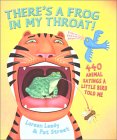 There's a Frog in My Throat: 440 Animal Sayings a Little Bird Told Me
by Loreen Leedy and Pat Street
published by Holiday House
Hot dog! Here's the latest from Loreen Leedy, who has made such engaging contributions to children's nonfiction likeFraction Action , Postcards from Pluto: A Tour of the Solar System
and
The Furry News: How to Make a Newspaper , but this latest collaboration with Pat Street is really a feather in the author's cap. The goose-chase is over; here are hundreds of idioms inspired by animals all gathered together in one place, and she must have worked like a dog to create so many wonderful and wild collage illustrations that explain each and every one of them. Pragmatically arranged under headings like "In the Wild," "On the Wing," ""Under the Waves and "Around the House," and an index to boot, this title is full of the information that kids need and the energy that kids want. This well-designed dog-and-pony show belongs in absolutely every ESL classroom, but is sure to be considered the cat's pajamas by any child who likes to laugh while they learn. (7 and up)
 Flick a Switch: How Electricity Gets To Your Home
by Barbara Seuling, illustrated by Nancy Tobin
published by Holiday House
It really is quite mysterious, why when we flick a switch a light goes on. In extremely accessible language and a few cartoon balloons, a girl and her dog trace the path from power plant to personal space. A few simple science experiments top off this rare informational science read-aloud, insuring that more than a few light bulbs go on when all is said and done. (7 and up)
 It's Back to School We Go!: First Day Stories from Around the World
by Ellen Jackson
published by Millbrook
What is the of school like in Kazakhstan? In India? In Kenya? In Canada? So much is similar! So much is different! The excitement of the first day in a new grade is the axis of universality upon which this cheerful book rotates, each child's experience relayed as if it were being shared over the dinner table. Opposite each first-person description of the day is more factual information about schools in each of the eleven countries. Web resources, including where to find international classroom community exchanges, recipes and games, invite teachers to use this book as a springboard into a world geography unit. (7 and up)
 The Snowflake: A Water Cycle Story
by Neil Waldman
published by Millbrook
As this author points out, the water you use may have tumbled obver Niagara Falls, or lay frozen for centuries in a glacier on the North Pole, sipped by your great-grandmother in her afternoon tea, or guzzled by T. Rex in a swamp millions of years ago. The water we have is all the water we have had or will have, and this transformation of water over time and place is a hard concept to grasp. Here we can follow a bit of water through each month of the year, as a snowflake melts into a droplet and over due course travels from deep inside a mountain to high inside a cloud, floating down once again as a snowflake. The journey gets poetic treatment here,with sparse, well-chosen language, and the smooth watercolors are so creamy-dreamy that they seem almost painted with milk. The glitter on the cover that makes the snowflake sparkle is a nice touch! A gentle language arts tie-in when using water cycle kits, available at science supply stores, or when catching snowflakes on your tongue. Also of interest: Walter Wick's A Drop of Water
. (7 and up)
 Scholastic Book of Outstanding Americans
by Sheila Keenan
published by Scholastic
Every now and then, you may observe a child tapping a pencil on his or her chin, contemplating the age old question: who should I write about for this report? Never again will children be at a loss! Here are profiles and quotations from over 450 Americans, from actor Marlon Brando to Mohawk leader Molly Brant, from architect I.M. Pei to Puppeteer Jim Henson, computer bigshot Bill Gates to actress Judy Garland, folks from nearly every field are presented in paragraph form with accompanying photo. It's like having a Google search for great Americans at your fingertips. (7 and up)

 Dangerous Planet: Natural Disasters That Changed History
by Bryn Barnard
published by Crown
This season brings us two titles that go out of their way to prove Murphy's Law: everything that can go wrong, will. Dangerous Planet is an intruiging study of Mother Nature's role in cause and effect, as a tsunami decides the destiny of the west around thirty-six centuries ago, Japan is saved from a crushing blow from Mongolian meshuggie Genghis Khan thanks to a couple of well-timed storms, and a blizzard to end all blizzards inspired the building of the subway. Told in a slightly snarky voice ("Location, Location, Location" is the heading for a section about the Ethiopian Plateau being central to a trading empire A.D. 750, and "Mr. Congeniality" describes King Edward III, whose coronation was catalyst to the Hundred Years' War), this book offers a very rare look at world history that integrates the natural sciences. Barnard's accomplished paintings have been commissioned by the National Geographic Society, though they do sometimes seem at odds with the writing which seems more modern. Still, they are dramatic and overall this book is an unusual and thoughtful contribution. For more evidence that nature's still in charge, check out America's Great Disasters
by Martin W. Sandler (HarperCollins). By "great" I assume the author means "large,"using a newspaper-style delivery of facts about different and more recent paths of destruction, such as the influenza epidemic of 1918, fires in circus tents, shirtwaist factories and forests, a variety of volcano eruptions, howling hurricanes and a tornado or two…you'll be thankful if your day passes uneventfully after reading this testament to the furies. The author does throw in a bright side, such as advances in technology and medicine, whenever possible; a much appreciated touch for worrywarts. Like me. (11 and up)
Follow thise shake, rattle and roll version of the earth with the stylings of Earthshake: Poems from the Ground Up
by Lisa Westberg Peters, illustrated by Cathy Felstead (Greenwillow), where you can crack this book open and find twenty two free verse poems glittering like the insides of a geode. Clever perspectives bring these poems down to earth, exemplified by "Earth Charged in Meteor's Firey Death," "Recipe for Granite," "Instructions for the Earth's Dishwasher," "Pumice Stone Seeks Work," "Obituary for a Clam," and the scolding tone of "Crumble!" in which a boy wonders at sandstone's response to life. Endnotes include all sorts of support for the rich earth-science vocabulary, and make this a rock-solid pick for classroom subject integration. (8 and up)
 Theodore Roosevelt : Champion of the American Spirit
by Betsy Harvey Kraft
published by Clarion
Teddy Roosevelt is often remembered in history books as the wild "Rough Rider" of the Spanish-American War, and that is why this book is so necessary; this is one president that was so much more, the one that exclaimed "No one has ever enjoyed life more than I have." This book suggests that there may be some truth to that statement! In his lifetime, Roosevelt bravely busted trusts, introduced reforms to the meat-packing and railway industries, was outspoken about the equality of women, led the building of the Panama Canal and was an impressive preservationist introduced legislation that still protects our natural resources today. During a speech while seeking presidential election, he was shot, and with the bullet in his body insisted on speaking for an hour and a half before being taken to the hospital. Well into his fifties, he decided to take advantage of "my last chance to be a boy" and plunged into an adventure exploring the Brazilian River of Doubt, kept company by the likes of Vampire bats, pirhanas and flesh-eating ants. His efforts in cartography led the river to be renamed the Rio Roosevelt. Despite his well-earned reputation as a rather raunchy and hard-boiled figure, was the first president to receive a Nobel Peace Prize. Children will especially revel in his accomplishments as he rises from a shy, asthmatic boy to popular president and adventurer. Excerpts from letters, archival photographs, a timeline and bibliography including websites and videos round out this fully realized portrait of a real American hero. It is safe to say there has never been anyone before or since quite like Teddy Roosevelt, though this book will surely inspire admiration and emulation of some of his spirited qualities in readers. I can't help but imagine that if he came across this handsome tribute today, he'd think it was very bully indeed. (10 and up) Interested children may also enjoy reading illustrated excerpts from his boyhood diary, found in My Tour of Europe by Teddy Roosevelt, Age 10 edited by Ellen Jackson and illustrated by Catherine Brighton (Millbrook). (8 and up)
 The White House: An Illustrated History
by Catherine O'Neill Grace
published by Scholastic
Can't make it to D.C.? Here is a field trip in a book! Besides taking a virtual stroll through each room of this celebrated landmark, this book offers insights into how it was built, how holidays are celebrated, voices from the people who work there such as the pastry chef, florist, presidential pet handler, photographers and security guards, and what makes this house a home for the privileged few who get to live here! All sorts of unusual material like a spread of presidential Christmas ornaments, an album of every presidential tenant and what they contributed to the place and pictures of the dollhouse model of the White House will capture children's interest and attention. Over two hundred sharp photographs capture every glint of crystal and hair of carpet, and the double page spreads that fold open into quadruple page spreads are truly magnificent. Elegant, varied fonts, a gold-embossed cover and multi-colored pages will also attract otherwise unlikely readers. By mixing the history of the past and the logistics of the present, this strong informational book is a homey homage that really does capture the majesty and history of this symbol of our executive branch. A must for patriotic families and classrooms. Introduction by Mrs. Laura Bush. (9 and up)


 Ten Little Mummies
by Philip Yates, illustrated by G. Brian Karas
published by Viking
It's hard to find a good book on Egypt for really young archeologists, but here's a counting books even your primary Pharaoh can appreciate. All sorts of interesting vocabulary like "sphinx," "Nile" and "chariot" are wrapped up in this story of mummies who are surreptitiously subtracted as they play in the desert, only to be reunited at the end, safe and cozy in their pyramid tomb. The stones on the end papers contain lots of solid information and fun facts, presented with a mix of Cairo and the Catskills ("Crocodiles in Egypt were worshiped as gods and mummified wearing golden earrings and bracelets…what snappy dressers!"). (6 and up) If youngsters who read this still want their "mummy," read aloud The Mummy's Mother by Tony Johnston (Scholastic), a jocular adventure by an award winning storyteller about ten-year-old Ramose who is trying to rescue his mummy mommy from graverobbers with the help of a talking camel. (8 and up)
Older children who would like to know more about Egypt have an offering this season as well in Voices of Ancient Egypt by Kay Winters and illustrated by Barry Moser (National Geographic), which uses free verse to explore many of the jobs in Egypt-of-old, and is a helpful addition to any ancient history curriculum. Classrooms can extend their reading by creating "help wanted" ads and answering them. (8 and up)
 Ask Me
by Antje Damm
published by Roaring Brook
Kids are so good at getting questions, but us grown-ups, well, sometimes we get a little rusty. This book will get those family conversation wheels oiled and turning! What do you like to collect? Have you ever found a dead animal? What will you save for your own child? What rules have you made? Did you ever see the moon rise? Page after page in this snappy little book features a simple inquiry and an attractive, modern adornment, either photographed or illustrated. The baby on the cover belies what a wonderful resource this is for anyone of any age who wants to have a converation with a child. Children who share this with an adult will find their experiences and thoughts valued, but it is also great fun for children to share between themselves, or for use by any kid who needs some material to use in making new friends! (5 and up)


 Fight On! : Mary Church Terrell's Battle for Integration
by Dennis Brindell Fradin and Judith Bloom Fradin
published by Clarion
A civil rights leader whose career spanned sixty years, the headlines read on the day of her death: "Mrs. Terrell Died Fighting." But this is the story of a life well-lived. Born the daughter of slaves, Terrell grew up graduate from Oberlin College, joined Ida B. Wells' crusade against lynching, Susan B. Anthony's crusade for women's sufferage, was the first African American woman to be appointed to our capitol's Board of Education and helped to form the NAACP. At age nintey, she began the biggest battle of her life, andher efforts to integrate theaters and restaurants sparked the protests that contributed to the end of segregationist laws. After such an illustrious career she would be ready to retire, but no, fighting for justic was more than a job, it was a lifestyle for Ms. Terrell! A generous share of very moving archival photography such as a boy drinking from a "colored" drinking fountain and reprinted leaflets and advertisements help to capture the gravity of the situation and the bravery it must have taken to stand up to such overpowering and frightening ignorance. Letters and anecdotes make this force of nature real flesh and blood that readers will root for, and a clear narrative line makes her rich life easy to follow. This book is demonstrative of outstanding research in children's biography, and is a nonfiction piece that is hard to read without crying. So much of what we take for granted today was hard won for us by this woman and many courageous spirits like her; include this book in any study of civil rights. (10 and up) Also of interest: Linda Brown, You Are Not Alone: The Brown V. Board of Education Decision
edited by Joyce Carol Thomas, a collection of recollections by famous authors such as Lois Lowry, Jerry Spinelli, Eloise Greenfield and Katherine Paterson about desegregation, and In Defense of Liberty: The Story of America's Bill of Rights
by nonfiction master Russell Freedman, in which the landmark document meant to defend the liberties of all is deconstructed piece by piece, each chapter given an amendment and thoughtful treatment in historical context. Freedman's text also helps children consider the implications of civil rights in current real world situations, like the use of explicit song lyrics or privacy on the internet. This well-organized and well-researched book contains information prerequisite to good citizenship, and shows that are rights are still evolving and we have a role to play in defining them. ( 10 and up)
 All Aboard! A True Train Story
by Susan Kuklin
published by Orchard
Woo-woooo! All aboard for a train-lover's delight! The locomotive is celebrated in these gorgeous photographs of five Durango and Silverton Narrow Gauge steam engines (in case you want to know) en route across the shining Colorado Rocky Mountains. Bold primary colors and puh-lenty of onomatopoeia make this one that will leave your whistle worn! Stop in your tracks and enjoy this bit of heavy metal with your favorite primary-aged engineer. (3 and up)
 Tooth and Claw: Animal Adventures in the Wild
by Ted Lewin
published by HarperCollins
Now, here's some run-ins that even Gary Paulsen might be proud of! When illustrator Ted Lewin is not busy collecting a Caldecott honor for Peppe the Lamlighter, he is a nature photography enthusiast whose travels have led him to encounters with hungry sharks, angry bears, venomous snakes, and, as the cover suggests, a tiger or two. This is a very personal piece that reads part adventure story, part personal journal, and is filled with sketches and handwritten notes ("I'm outta here!" "ROAR!" "World's biggest rats!"). The author's descriptive ability is strong but not overwhelming for young readers, and his love of nature comes shining through in all the highs and lows of outdoor living. Give to your most rugged reader, or present as a prize when your scout earns that camping badge. (8 and up)

 All the World's a Stage
by Rebecca Piatt Davidson, illustrated by Anita Lobel
published by Greenwillow
"This is young William,/His mind all ablaze,/ Who stays up all night,/Writing poems and plays." So begins the clever cumulative tale (a la "the House that Jack Built") that provides cameos for many of the characters and plays of the Bard of Avon. It is a workable introduction for young children but also plays well for reluctant older children who need their appetite whetted for a taste of many of these classic plays. Composites of dramatic moments from each play are portrayed with the illustrator's dramatic flair, so upper grade and high school teachers may want to create overheads from the pictures and use them to introduce characters. All the world's a stage in this inventive book, smiled upon by the muse that hangs over the shoulder of Shakespeare throughout. (8 and up)
Theater lovers should also be sure to get a ticket to
Shakespeare's Romeo and Juliet edited by Michael Rosen and illustrated by one of my my very favorites, Jane Ray (published by Candlewick). The romance shines through like light breaking through yonder window thanks to Ray's delicate marionette-like figures and starlit scenes. Sensible abridgment integrating lines from the script and contemporary narration, making it read like a well-paced radio play, and the helpful and unobtrusive sidelines defining difficult vocabulary obviously aspire to bring the greatest love story of all time to a younger audience. In fact this is still also one of the greatest tragedies ever written with a bit of blood spilled, so consider it best appreciated by older children. What a lovely reprieve for audiences of some of the gunky young adult mush-fests out there! A gorgeous and affecting work that makes an excellent gift for your favorite thespian. (10 and up)
Ten Little Mummies
by Philip Yates, illustrated by G. Brian Karas
published by Viking
It's hard to find a good book on Egypt for really young archeologists, but here's a counting books even your primary Pharaoh can appreciate. All sorts of interesting vocabulary like "sphinx," "Nile" and "chariot" are wrapped up in this story of mummies who are surreptitiously subtracted as they play in the desert, only to be reunited at the end, safe and cozy in their pyramid tomb. The stones on the end papers contain lots of solid information and fun facts, presented with a mix of Cairo and the Catskills ("Crocodiles in Egypt were worshiped as gods and mummified wearing golden earrings and bracelets…what snappy dressers!"). (6 and up) If youngsters who read this still want their "mummy," read aloud The Mummy's Mother by Tony Johnston (Scholastic), a jocular adventure by an award winning storyteller about ten-year-old Ramose who is trying to rescue his mummy mommy from graverobbers with the help of a talking camel. (8 and up)
Older children who would like to know more about Egypt have an offering this season as well in Voices of Ancient Egypt by Kay Winters and illustrated by Barry Moser (National Geographic), which uses free verse to explore many of the jobs in Egypt-of-old, and is a helpful addition to any ancient history curriculum. Classrooms can extend their reading by creating "help wanted" ads and answering them. (8 and up)
Ask Me
by Antje Damm
published by Roaring Brook
Kids are so good at getting questions, but us grown-ups, well, sometimes we get a little rusty. This book will get those family conversation wheels oiled and turning! What do you like to collect? Have you ever found a dead animal? What will you save for your own child? What rules have you made? Did you ever see the moon rise? Page after page in this snappy little book features a simple inquiry and an attractive, modern adornment, either photographed or illustrated. The baby on the cover belies what a wonderful resource this is for anyone of any age who wants to have a converation with a child. Children who share this with an adult will find their experiences and thoughts valued, but it is also great fun for children to share between themselves, or for use by any kid who needs some material to use in making new friends! (5 and up)

 First to Fly: How Wilbur and Orville Wright Invented the Airplane
by Peter Busby,
illustrated by David Craig
published by Crown
2003 marks the centennial anniversary of the historic flight at Kitty Hawk, and teachers who want to celebrate, this is the book for you! This attractive volume has a nice big wingspan and covers a lot of ground: from biographical insights like the rubber-band helicopter toy the brothers shared as boys, to terrific science sidelines, like the box "How Does Wing-Warping Work?" to small sections like the interesting story of the German "Flying Man" Ollie Lilienthal and how he inspired Orville and Wilbur. Rich realistic paintings and a generous smattering of archival photographs decorate the book, and it also includesa timeline, glossary and selected bibliography. Still, this marriage of science and social studies manages not to carry too much as to overwhelm the reader; rather, is a first class ticket on the flight that people dreamed of taking since the dawn of time, and two persistent siblings managed to pull off. This book won the James Madison Award for nonfiction that focuses on American history. Congratulations, Peter Busby!

 For more great literary tributes to Orville and Wilbur, check out:
The Wright Sister: Katharine Wright and Her Famous Brothers by Richard Maurer (yes, the Wright Brothers had a sibling! Don't forget to include her in any Wright brothers study; she ran the household and got little credit.)
My Brother's Flying Machine by Jane Yolen, illustrated by Jim Burke
The Wondrous Whirligig by Andrew Glass
Race for the Sky: The Kitty Hawk Diaries of Johnny Moore by Dan Gutman
Touching the Sky: The Flying Adventures of Wilbur and Orville Wright by Louise Borden and Trish Marx, illustrated by Peter Fiore
The Flyers by Allan Drummond
Joe-Joe's First Flight by Natasha Anastasia Tarpley, illustrated by E. B. Lewis (includes some history of African-American aviation)
Rider in the Sky: How an American Cowboy Built England's First Airplane by John R. Hulls, David Weitzman
Wings and Rockets: The Story of Women in Air and Space by Jeannine Atkins, illustrated by Dusan Petricic
and I still love last year's book about Aviator Bessie Coleman, Talkin' About Bessie by Nikki Grimes.
 Raising a Reader: A Mother's Tale of Desperation and Delight
by Jennie Nash
published by St. Martin's Press
There are very few parenting books I have read that I could shout, "I didn't want it to end!" but that is the case with this candid tell-all of a mother who is is passionate about books, and is eager to pass her enthusiasm on to her daughters. The author faces challenges as she realizes that there are all different kinds of readers in the world, and a variety pack happens to exist within her own household. An extemely brave parenting confessional, many scenes will ring familiar as Nash struggles with the tensions of parent-teacher conferences and the competition she feels as one child lags in the great reading race, and shares those shining moments when street signs begin to make sense and the world of words begins to crack open like a treasure chest. Besides offering all sorts of pragmatic suggestions and ideas at the end of each anecdotal chapter (such as "The Birthday Journal," "Soak up the Pleasures of the Bookstore," "The Three Chapter Rule," "One Dad's Storytime Secret," "What You Get When You Turn Off the TV"), there are several specific book recommendations and lots of good family dialogue that rings true. In all of its honesty, this book offers the great gift of perspective, and invites us to celebrate our children wherever they are on their reading journey. "I glanced around the little cabin, now dark with the night and lit by the fire. My whole family was there and it felt like we were in a state of grace. I realized that it wasn't really about anybody's ability to read, and it wasn't about any of the books that were being read. It was about just being able to be together in a quiet room, at peace in each other's presence." Sigh! (parenting)
 Sparrow Jack
by Mordicai Gerstein
published by Farrar Straus Giroux
"Not all the immigrants that came to America in the early days were people," the book begins, and this story starts with the boy destined to provide the passport for many fine feathered friends. In England in 1838, sparrows were considered tasty snacks when roasted, but John Bardsley enjoyed the flock without frying them. John missed the sparrows when he emigrated to Philadelphia, but was glad to find work as a housepainter. Based on observations made as a boy, does John have the answer to the worm infestation that plagues his new city? This true story is also the answer to your bookworm problem of what to read next, combining biography, science, history, and a gentleness that is refreshing in a story featuring a male protagonist. (6 and up)
 Ice Cream Cones for Sale!
by Elaine Greenstein
published by Scholastic
Who invented the ice cream cone? Was it Ernest Hamwi, a waffle-maker from Syria? Did the muse visit Charles Menches when he handed a bouquet to his lady-love? Was it Italo Marchiony, who pushed the pushcart all day in the hot summer sun? There are seven contenders for the credit cone at the 1904 World's Fair in St. Louis, but only one is the true inventor. Children will have fun trying to guess which one it is, and also be introduced to the idea that there are many claims on history; use this book to sprinboard into an investigation into the story behind inventions. The pastel scratchboard technique is as cheerful as a strawberry sundae, but this book is better than a banana split for my money: it won't melt! Use this summery reading treat to turn any primary ice cream social into a storytime, too. (5 and up)

 Ah, Music!
by Aliki
published by HarperCollins
This well-orchestrated compendium of musical informationexamines the likes of harmony, melody, rhythm, pitch and tone, introduces all of the instruments in the orchestra, celebrates diversity of music throughout world cultures and offers a wealth of timelines such as "the flowering of classical music" and "the birth of jazz." Sound ambitious? Desecribing music in words could be a dirge, but thanks to Aliki's obvious enthusiasm for her subject and brightly illustrated vignettes, every page hits a high note. Though this book will inspire any child studying music, primary teachers can also use this book in concert with arts education by treating each page as a lesson plan and accompanying it with favorite tunes from a personal CD collection. Join children in being introduced to musical talents from ancient times to techno-pop. Ah, Aliki! Nobody does nonfiction like you do!
(7 and up)
Music lover's hearts will also skip a beat when they readM is for Music
by Kathleen Krull, illustrated by Stacy Innerst (Harcourt), a thoughtful and exciting alphabet book that is as eclectic and entrancing as your old collection of LP's. Within the pages of these books, P is for "piano and practice practice practice," K is for Klezmer, B is for the Beatles and L is for LOUD enough to see the little girl's tonsils. The vocabulary is surprising and the painted illustrations that cross boardaries of folk, jazz and funk are absolutely inspired, such as the "V is for voice and vibration" accompanied by a drawing of a virtuoso in full Wagner garb shattering a wine glass with her va-va-voom vocals, and the "Z" that is for zydeco is dressed with a dancing alligator and a worried washboard player. Doesn't that beat "Z is for Zebra" any day? This book deserves a full scholarship to Julliard and a place in your collection. (all ages)
 Tippintown: A Guided Tour
by Calef Brown
published by Houghton Mifflin
If your wildest dreams could have dreams, they would be set in Tippintown.Told in rhyme, readers are treated to a tour starting at the statue of Amelia Tippen "invented the folding chair./Then she became an astronaut,/now she's a millionaire." From there, readers can venture on to the Tippin Museum of Art, or hike up Tippinoggin mountain to find the more attractive cousins of the statues on Easter Island, then drop off a canoe to witness a porpoise graduation, climbing on to the island of the stunning Assortment Tree. Of course, what tour would be complete without a little lunch (chocolate enchiladas, anyone?) and just wait until you see the souvenir shop! Brown's poetry would have made Edward Lear lift an eyebrow and go "wow," and I think this book is his best to date. The illustrations are of the same wonky school as Maira Kalman, with faces in fuschia and comely periwinkles, and elephant trunks are not out of the question for the tour guides. This book will emancipate the imaginations of all who read it, and will have children pulling at the bit to write their own descriptions of fantasy towns. (6 and up)  Camp Granada: Sing-Along Camp Songs
illustrated by Frané Lessac
published by Henry Holt
Break out the s'mores and the bug spray, it is officially summer every time this binding is broken! From "Kum Ba Yah" to "John Jacob Jingelheimer Schmidt," from "Found a Peanut" to "Do Your Ears Hang Low," this is exactly the book every kid needs to tune up for camp. The lyrics to over thirty rousing sounds is included here, and bunk beside naive and nifty artwork that brims with figures of multicultural children experiencing every aspect of the great outdoors: climbing trees, swimming, hiking, as well as the occasional rainy day and trip to the infirmary. This generous care package is one that will be opened again and again.
(7 and up) Mrs. Chicken and the Hungry Crocodile
by Won-Ldy Paye and Margaret H. Lippert,
illustrated by Julie Paschkis
published by Henry Holt
When Mrs. Chicken walks down to the river to admire her reflection, she becomes crocodile bait! Dragged to a reptilian lair to be gobbled upon, she cunningly convinces her foe that they are actually sisters, and feasting on family is of course in bad form. Crocodile decides to let her prove their familial ties, figuring it will give her time to fatten up her future dinner. As both bird and beast lay their eggs, Mrs. Chicken does a bit of quick change and clever thinking to save the day. No wonder why chickens always take their baths in puddles! Folksy, engaging art in bold tones and patterns is a perfect accent for this suspensful Liberian folktale.
(4 and up) A Chapman Award Winner!  Uncle Andy's: A Faabbbulous Visit with Andy Warhol
by James Warhola
published by Putnam
Young readers can hop in a car and join in a reading road trip based on the author's real-life recollections of a childhood visit from rural Pennsylvania to his uncle's avante-garde art world in New York City. Uncle Andy, though clearly not expecting them, welcomes them into his playland of cats, wigs and boxes of Campbell's soup. Uncle Andy's appreciation in the junk his father brings him from the junkyard teaches his nephew that "art is something that is all around us, all the time." Uncle Andy's understated cries of "ooooohs!" and "faaaabulous!" merit imitation and the clean, detailed illustrations are delightful. Ultimately, though, the charm of this book is not so much the voyeuristic insider's view into the artsy-farsty world of Andy Warhol (granted, it is mighty fun), but the underlying excitement of visiting a relative far away, and the impact that a "black sheep" can make on a family. Surprisingly touching, honest and inspiring, this book deserves a lot more than fifteen minutes of fame. A significant contribution to both picture book biography and arts education collections.
(6 and up)
by Kay Winters,
illustrated by Nancy Carpenter
published by Simon and Schuster
They thought he was lazy, this boy who would take a book out of his back pocket to read at the end of each row he'd plow. In fact, bigger things were in store for this young dreamer who was destined to become out 16th president. Readers are treated to a homey glimpse of this hero's boyhood, leaning on his father's lap by the fireside as yarns were spun, splitting wood, shivering with his sister in a drafty log loft. It chronicles both the dark days (like when Abe's mother dies of "milk sickness" when he is nine) and exciting adventures (such as the great wrestling match between him and Jack Armstrong, which was met with cries of "Body slam! Body slam!" by my second grade listeners). The story stops where most others begin, as Lincoln takes his seat at the White House. The unpretentious illustrations are evocative of the period and contain many details that are springboards to discussion, such as what schools were like in pioneer times, and why Lincoln campaigned from a train. To be honest, this is one of the best biographical selections to come along for young booklovers in a long time. (6 and up)
 A Library for Juana: The World of Sor Juana Inéz
by Pat Mora,
illustrated by Beatriz Vidal
published by Knopf
This exquisite volume pays homage to the great poet of the seventeenth century and one of the greatest booklovers of all time. While children today still recite her poetry throughout the Spanish-speaking world and her face appears on Mexican currency, many North American girls will find a new and worthy heroine between these bindings. Juana Inéez is a child prodigy, her thirst for knowledge so great that she follows her sister to school when she is three years old and learns to read. So begins an unusual childhood for her time; though girls were not permitted at university, at ten years old she went to Mexico City where she was privately tutored, ultimately becoming a lady-in-waiting at the viceroy's palace and wowing the court and an assemblage of forty scholars. She ultimately left the palace and became a nun so that she could concentrate on her pursuit of knowledge and create one of the largest libraries in all of the Americas, and one glorious day, her own book of poetry would be added to those shelves. Children will be inspired by her cheerfulness and insistent spirit, and intruiged by how someone so long ago could have had such modern sensibilities. Nearly every page is graced with borders of delicate fruit and flowers, and the illustrations are crisp and elegant, painted using small brushes under a magnifying glass. A jewel of a book about a jewel of a woman. (6 and up)
 Beautiful Blackbird
by Ashley Bryan
published by Athenuem
Nobody does a folktale like Ashley Bryan, uh-huh, uh-huh! Full of rhythmic refrains, this is the story of a magnanimous blackbird who paints his admired color on to the plumage of all his friends. Yes, black is beautiful! The other birds are not envious, and Blackbird is not selfish; in fact, the underlying theme might be that one's strength can become everyone's strength. The entire book is as bold and vibrant as the cover suggests. The endpapers feature his mother's sewing scissors, which Bryan used to create the book's cut-paper collages. Like Blackbird, Bryan strong creative voice sings from every page. Harmonize with your own read-aloud. (5 and up)
 The Ancestors Are Singing
by Tony Johnston,
illustrated by Karen Barbour
published by Farrar, Straus Giroux
The past and present intermingle graciously in this powerful poetic trip through Mexico. Visit the land where legends may yet rise up, where Quetzacoatl and Tenochtitlan are only sleeping beneath a thin veneer of human memory. These poems awaken them in us, and bring the streets to life so that we can hear the music of the fountain in Chapultepec park, the calling voice of a shoeless boy selling newspapers on a streetcorner, feel the heat of a day as hot as jalapenos and the sleepy slithering of a snake in old temple walls. "Old Palaces" and "In Chiapas" are two of my favorite poems, both dealing with the crumbling of old worlds to make way for the new; these are also very useful for inclusion in studies about the rainforests. The stylized black-line illustrations are so bold and inviting, I wonder how long before a child takes a crayon to them; maybe they should be encouraged! This collection includes some of the most powerful, personal and readable poetry I have seen in a long time. For Spanish-speaking children, the words may be familiar, and for non-bilingual children, the language does exactly what it should in poetry: create interest and beauty. (8 and up)
 My Brother Martin: A Sister Remembers
by Christine King Farris,
illustrated by Chris Soentpiet
published by Simon and Schuster
What was it like growing up with Martin Luther King? King's sister remembers, and generously shares her recollections of a boy whose circumstances inspired him to become a legend and icon of peace for all mankind. She recollects neighborhood mischief, piano lessons, visits to a firehouses and relative's houses and other events that mark an ordinary childhood, as well as the brave examples set by his family in a climate of segregation. Even describing these dark days, Soentpiet's realistic paintings are glowing with light. One of the real diamonds of this book, however, is the poem at the end of the book, "You Can Be Like Martin," written by Mildred D. Johnson, which screams to be read chorally. This book is a necessary addition to every classroom in the country, and a priceless contribution to the body of knowledge about the Civil Rights movement. Children reading this book will be chilled as Christine King Farris recalls a conversation with his mother about the inequities they were experiencing, and young King foreshadows, "Mother Dear, one day I'm going to turn this world upside down." He turned it right-side up, if you ask me! (7 and up)
 George Washington's Teeth
by Deborah Chandra and Madeleine Comora,
illustrated by Brock Cole
published by Farrar, Straus and Giroux
What was the biggest challenge for the father of our country? The invasion of British troops? Winter at Valley Forge? No, it was toothaches that ultimately brought poor George Washington to his knees! Starting at age twenty-four, Washington lost a tooth a year (spitting out two as he crossed the Delaware) and by the time he took office, he had only two chompers left! No wonder he didn't smile for his portraits! Told in witty verse, we follow the immortal general as he battles this mortal and mortifying malady. The watercolors are glorious and humane. This book shows that even the most powerful people are prone to an Achilles' heel (or molar), and incorporates all sorts of fascinating and downright juicy history. A timeline is included at the end, along with a photograph of Washington's last set of dentures carved from hippopotamous ivory. It is unusual to find history told in a way that is so accessible and compelling to young children. How resonating is this book? My son came up to me wiggling a tooth and announced joyfully, "Ma! I'm just like George Washington!" (6 and up)
 How Ben Franklin Stole the Lightning
by Rosalyn Schanzer,
illustrated by Ingrid Godon
published by HarperCollins
Although the life of Ben Franklin offers enough fodder for several biographies, the author chose to focus on his scientific inquiry to create a picture book children are sure to get a charge out of. Schanzer's conversational tone coupled with a sense of suspense as to exactly what invention allowed Franklin to steal lightning from the sky make this story a page-turner. Franklin is depicted as a visionary, initiating the first fire department, first lending library, being the inventor of bifocals, the second hand on the clock, odometers…the list goes on and on and on, the book clearly making the point that there is no American today that is not touched daily in one way or another by this man's initiative.  The cartoonish illustrations shows Franklin in all sizes and in all sorts of poses, versatile and jolly, fitting to the man and lots of fun for the lucky reader. From the enpapers featuring Franklin's original drawings for possible experiments to the detailed end notes, the author's enthusiasm for her subject is clear, and contagious. This book offers young children a truly great American hero, and an example of someone who made the most of time by loving to learn and sharing what he learned with all who would benefit. And what exactly did he invent that "stole lightning" and saved countless lives (including his own family's)? Read it and see! A little chatty-chat about electrical safety wouldn't be out of order, either. (6 and up)
Older and motivated children may also enjoy the handsome and informative Ben Franklin's Almanac: Being a True Account of the Good Gentleman's Life by Candace Fleming (Atheneum), a gorgeous scrapbook which includes sections like "Boyhood Memories," "The Writer's Journal," "The Scientist's Handbook," "Revolutionary Memorabilia" and "Souvenirs from France." The book design is outstanding, in an elegant newspaper-like layout that printer Ben Franklin would surely approve of. This absolutely smashing piece of Americana is sure to garner awards for children's nonfiction. (10 and up)
 Beatrix
by Jeanette Winter
published by Farrar, Straus and Giroux
On the third floor nursery of a tall brick house in Victorian England, there lived a lonely little girl who loved animals. Visits to the countryside and to museums fed the curiosity of this headstrong child. This is the young Beatrix Potter, who grew up to become a great naturalist and artist, and ultimately the author of the belovedTale of Peter Rabbit. The remarkable thing about this biography is that it really can be enjoyed by children young enough to enjoy Peter Rabbit. The text is straightforward, with little remarks taken directly from Potter's journal and placed in italics. Many children will quickly identify with Potter's desire to find friends wherever they may be, and her escapes into imagination. The book is cleverly designed to fit small hands, with each page containing a frugal amount of text accompanied by a "snapshot" of an illustration, again, a tribute to the format of Potter's twenty-three funny little books for children. The illustrations here, though, are bold and more heavily saturated than Potter's work, black lines filled with bright colors, reminiscent of the illustration style of Victoria Chess. From the tasteful twining of green vines of the front cover to the clever rabbit casting a sidelong glance over the barcode on the back, this sophisticated biography will give enjoyment and insight to all who read it. (4 and up)
 Through the Tempests Dark and Wild: A Story of Mary Shelley
by Sharon Darrow,
illustrated by Angela Barrett
published by Candlewick
At fourteen, Mary Wollstonecraft is sent from a Cinderella-like situation in England to Scotland, residing with friends who she came to love as family. Through the cultivated language of the author, we can imagine days strolling by the shores and fireside evenings (sans television!) imagining the most spine-chilling of stories for entertainment, some even shared here for the reader's shivering pleasure. Upon her return to England, she still failed to fit the mold that her family intends for her and mourns for the mother she never knew, but translates her isolation into power by writing what two hundred years later is considered one of the first modern works of science fiction, Frankenstein. It is clear to see that the romantic situation of her upbringing lent itself to the literary nurturing of Mary Shelly. Here is an example of a perfect picture book for older children. The illustrations are full of silhouettes and dark, with an emphasis on romantic setting, as was the case with Shelley's own writing. It lets off where feature husband Percy enters the picture, usually where high school curriculum begins. Definitely Goth. (9 and up)
 Into the Woods: John James Audubon Lives His Dream
by Robert Burleigh,
illustrated by Wendell Minor
published by Atheneum
"Be a store owner, his father said./But John went to the woods instead." So begins a fictional letter written in verse to the father of naturalist painter John Audubon, explaining to his disappointed parent why he must follow his unconventional path into the woods. Underneath each piece of verse written by the author is a complimentary segment from Audubon's real journal, which makes for tricky read-aloud, unless you consider that you can actually read this book two different ways, either one telling of a man with a great appreciation of his environment and a passion to preserve it for the ages. The accomplished paintings of Wendell Minor and samples of Audubon's own work combine to compliment this introduction to an American original. A bird in this book is worth two in the bush. (8 and up)
 Stone Soup
by John J. Muth
published by Scholastic
In a new setting for this traditional trickster tale, three Buddhist monks visit a village full of hard-hearted souls, and teach them the value of generosity by getting each villager to contribute a small thing that will improve a soup that can be enjoyed by everyone. While the watercolor paintings are expert and full of lovely Chinese detail (I love the shadow puppet show being played under red lanterns at the banquet, and children will enjoy finding the child in the yellow tunic in each picture) , they are far more muted than the ones in the more commonly used classic version by Marcia Brown, making it a trickier pick for storytimes with a group. However, Muth's version is more textured as far as the storyline goes; in his version, we know that the village has undergone hard times, accounting for the tension, and unlike the soldiers in Brown's version, these monks are not out for personal gain. Children may enjoy comparing the different versions, but one thing is clear as broth: Muth has definitely added his own personal spice to this Stone Soup. (5 and up)
 The Bachelor and the Bean
by Shelley Fowles
published by Farrar, Straus & Giroux
In this Jewish folktale from Morocco, a curmudgeonly bachelor crosses paths with an imp in a well, who gives him a magic pot that produces unlimited amount of food. When his nasty neighbor notices that he owns such a valuable commodity, she steals it in the night. He registers his complaint with the imp, who tries to calm him by offering another pot which performs an equally magical feat, but again, it is promptly pilfered by the same neighbor. Upon returning a third time, the exasperated imp gives him a pot that reveals the thief, and leads to a match being made in...well, somewhere south of Heaven. Apparently, there is someone out there for everyone! The watercolor illustrations are energetic, funny and reminsicent of the multifacted jewelwork of Brian Wildsmith. This very unusual contribution to the body of Jewish children's literature has outstanding storytelling appeal and leaves nothing more to wish for. (5 and up)
 Far Beyond the Garden Gate: Alexandra David-Neel's Journey to Lhasa
by Don Brown
published by Houghton Mifflin
Even as a child, Alexandra's favorite gifts were maps and travel gifts, and she would wander from her home only to be found hundreds of miles away. These were the adventurous beginnings of the girl who in 1924 would become a Buddhist scholar and the first Western woman to visit Lhasa, the capitol of Tibet. The escapades with her friend across frozen mountain passes in disguise, in search of the "Forbidden City" are told in present tense and are peppered with quotes from her journals, giving this story a thrilling immediacy.  The artwork is stark and belie the solitude of the journey and the boundlessness of both the landscape and her traveling spirit. How boundless? Alexandra was 101 years old when she died, but renewed her passport just a few months earlier! Don Brown has done several biographies of remarkable people (women in particular). It is with special pleasure that this book is recommended; a truly eye-popping, awe-inspiring tale that is too good to be true…yet it is! (7 and up)
And if you too dream of the Himalayas but are prone to altitude sickness, you can still travel there by reading All the Way to Lhasa: A Tale from Tibet by Barbara Helen Berger (published by Philomel), a luminous parable of a boy who makes his long pilgrimage by taking small and steady steps. The smooth, flawless illustrations are accented dazzling reds and golds, and float within the whorls of roiling clouds. This story will embolden young readers to embark on any journey that leads them to their heart's delight. (5 and up)
 Moon, Have You Met My Mother?: The Collected Poems of Karla Kuskin
by Karla Kuskin,
illustrated by Sergio Ruzzier
published by HarperCollins
At last! Yum-yum, a beautiful, big, bulky book full of the wordplay from poetry's favorite playmate! After having fifty books of poetry published, here are three-hundred-some pages of her tripping, skipping rhymes, interspersed with silliness ("Being a strawberry isn't all pleasing./ This morning they put me in ice cream./ I'm freezing.") as well as introspection ("What separates each one of us/from all the beasts and bugs and birds?/ Well they have feathers, fur and wings/ but we have words,/ and words,/ and words."). The poems are all untitled which is hard to get used to, but once you do the volume seems to meander pleasantly, all in all feeling like a leisurely visit with an observant, humorous friend. Some of her poems about books and reading warrant purchase by any and all librarians and booklovers, but all of the poems are so deceptively simple and conversational that children who read it will think, "oh, poetry is someone talking to me!". The new Karla Kuskin collection: Don't leave National Poetry Month without it. (5 and up)
 Wild Birds
by Joanne Ryder,
illustrated by Susan Estelle Kwas
published by HarperCollins
Your youngest naturalists will enjoy this high-flying exploration of our fine-feathered friends. Start by naming all the birds on the line, and then join the young birdwatcher as she spies them throughout her neighborhood. Even in the city, the wonder of nature peeks and peeps out at us, and you can use this book to begin to take notice! The artwork is especially vivid and bold with colors deep as autumn sunsets. The variety of perspectives gives it a contemporary cinematic quality that kindergarten mod squads will appreciate. The lilting text speaks directly to the reader and listener in a most winsome way, inviting everyone to peek in the eaves or spy in the treetops. (4 and up)
 Harvesting Hope: The Story of Cesar Chavez
by Kathleen Krull,
illustrated by Yuyi Morales
published by Harcourt
On a ranch in the Arizona desert was a family thriving on eighty acres, until the great drought drove them all to migrant work. Though their crops may have withered, a seed was germinating in young Cesar Chavez. The indignities he experienced as a shy Spanish-speaking student and the grueling conditions are honestly portayed. Children will be stirred by these indignities, and their hearts equally swelled by the huelga, Chavez's peaceful movement against threatening overlords. His three-hundred mile march from Delano to Sacramento was the longest in U.S. history, and resulted in the first ever contract for farmworkers. This is an extremely powerful book that underscores the bravery and resolve it takes to engage in non-violent protest, and rightly puts Chavez on the same scaffolding as Martin Luther King as a champion of civil rights. The lush illustrations roll across double-pages horizontally set, thoughtfully designed as to emphasize distance: how far the people had to travel both spiritually and physically to achieve the goal. A page-turning read-aloud about an important chapter of Latino history, this is a welcome and well done contribution to the shelves of children's biography. Viva la Causa!
(7 and up)
 Frogs Sing Songs
by Yvonne Winer
illustrated by Tony Oliver
published by Charlesbridge
Natural history works in concert with geography in this tribute to frogs all over the world. The artwork is so lifelike that you'll swear the frogs are just pasuing on the page before they bound off. Musical verse in the sweet accompanient, with a very thorough frog identification guide in the back so that children can discover more about each frog featured. Inspired by the desire to preserve frog habitats to maintain the species, "this book celebrates the joy of frog sounds, in the hope that they will not be silenced." It succeeds in leaps and bounds. (5 and up)
 Rats! The Good, The Bad and the Ugly
by Richard Conniff
published by Crown
All right, rats are definitely not my favorite subject, but there's no denying that this book has off-the-charts kid-appeal. From the squealy endpapers featuring a furry morass of the vermin to the up-close and personal photoessays within, this is a great study of the real rat pack from tip to tail. Fascinating facts include everything you ever wanted to know (and maybe some you didn't) in a marvelously clear and readable journalistic style, from an author who has written many articles for magazines like National Geographic and Smithsonian, presented nature programs for the Discovery Channel and the BBC. The book is brilliantly designed, too with hip fonts and designer background colors, making this book practically irresistible (that is, except for the rats…uuuuGGGGGhhhhh!). Gotta give credit where credit is due; the rat is one of the most successful animals on earth, and likewise, I believe this book will be among the most successful at trapping reluctant readers. (7 and up)
 Remembering Manzanar: Life in a Japanese Relocation Camp
by Michael L. Cooper
published by Clarion
The author starts his journey into the past by joining the Manzanar pilgrimage in the present. An annual event since 1969, upon his arrival the author observes that the site looks simply like an old army post. From there, the experiences of Japanese American citizens evacuated there during World War II are revealed, using dairies, news articles, testimonies and photographs (some by Ansel Adams and Dorthea Lange). This book is a well researched and highly readable introduction into this dark chapter of American history, suitable for intermediate readers and also adults who would like to learn their history in hopes we don't repeat it. (birth and up)
 Eyes and Ears
by Seymour Simon
published by HarperCollins
With over two hundred award-winning science books to his credit, Simon makes his latest contribution to his study of the human body by focusing on two parts many of us use every day. Children can discover their own blind spot, see what a real eardrum looks like (look how tiny those bones are!) and learn how we see in color. This illuminating photoessay is lovely to look at, with big bold print and several supporting diagrams, offering plenty of information to satisfy curiosity or to write a resounding report. Children who look and listen to this book will have a newfound understanding and appreciation of these anatomical miracles.
 Mother to Tigers
by George Ella Lyon,
illustrated by Peter Catalanotto
published by Atheneum
Helen Delaney Martini had three babies...baby tigers, that is! When her husband, a zookeeper at the Bronx zoo brought home animals that needed special care, they thrived under Helen's loving touch. When the tigers grew up, she realized there would always be zoo babies who needed nurturing, and started the first zoo nursery! "Before Helen arrived, no tiger born at the zoo ever survived. She raised twenty seven." So the next time you visit the big cats in the zoo, just think, that they may be grandcubs of Helen's wards! This compelling picture book biography of the Bronx's zoo's first woman zookeeper will touch the heart of any animal lover, and are accented with dramatic illustrations in torn paper panels. (7 and up)
 Days of Jubilee
by Patricia C. and Frederick L. McKissack
published by Scholastic
Many days and weeks led up to the emanicpation of the slaves following the Civil War, and this book is an accounting of these "days of Jubilee," in which the news spread, state by state and home by home, that at last no man could own another. Narratives, letters and documents support the stirring tales, with special attention to the affects of this within military and political ranks. Many well known figures from black history figure in, such as Sojourner Truth and Frederick Douglass, making this an especially supportive text for intermediate classrooms. You may want to consider reading this in combination with Walter Dean Myers' Now is Your Time! The African-American Struggle for Freedom and Belinda Hurmence's My Folks Don't Want Me to Talk About Slaverywhich touches more on the ramifications of Reconstruction, but for all-out celebration of some good news, recommend this to your young history buff. (9 and up)
 This Place I Know: Poems of Comfort selected by Georgia Heard, illustrated by Eighteen Renowned Picture Book Artists
After September 11th, a number of children's books appeared that tried directly or indirectly to help children cope. This volume of poetry is one that will renew hope in all who read it, and shines as an outstanding poetry anthology under any circumstances. Collected by a renowned poetry teacher, each brilliantly chosen inclusion gets a full page illustration from a celebrated artist: Chris Raschka, William Steig, Elisa Kleven, Holly Meade, Peter Sis, Giselle Potter and G. Brian Karas are just a few of the gifted contributors. The poems themselves are not heavy-handed, instead, each seems to have a small voice inside that sings like a tiny bird. Take, for instance, Gwendolyn Brooks' "A Little Girl's Poem," which begins "Life is for me and is shining!" Or the affection reverberating from the last lines of Maragaret Tsuda's "Commitment in a City": "If you were not here/to pass me by,/a piece would be missing/from my jigsaw-puzzle day." Or the promise chanted in Faiz Ahmed Faiz's "Song": "The seasons will change, do not grieve, do not grieve." As folktales tell us, there is no house that is not touched by sadness at one time or another, and so every home should have this gentle and beautiful book. Apply as needed. (All ages)
 Moonbeams, Dumplings and Dragon Boats: A Treasury of Chinese Holiday Tales, Activities and Recipes by Nina Simonds, Leslie Swartz and the Children's Museum, Boston, illustrated by Meilo So
Every teacher I showed this book to gave a gleeful shout upon receiving it in their hands, as if welcoming someone they hoped would stop by. I gave the shout myself when I saw this title, a much-needed resource and long-awaited addition to any multicultural collection. This book spills over with crafts, recipes, stories and fascinating general information pertaining to Chinese New Year and the lantern Festival, Qing Ming and the Cold Foods Festival, the Dragon Boat Festival and the Mid-Autumn Moon Festival. Intruiged? You should be, this stuff is more delicious than a Five-Treasure Moon Cake (yes, a recipe for that is included, too!). A guide to Chinese pronunciation, internet resources and a compass to the Chinese Zodiac are a few of the handy extras that you'll find. Some of Meilo So's illustrations are so brightly colored and energetic, I wonder if she didn't dip her paintbrush into a firecracker to make these pictures! Phenomenally festive and just plain fun, both children and adults will love poring over it, and every teacher absolutely needs it! Non-fiction fit for a dragon! (6 and up)

 Hello, World! Greetings in 42 Languages Around the Globe
by Maja Stojic
This friendly book shows children how to greet someone from Amharic to Zulu! Each page depicts a tempera-painted ambassador smiling and waving hello, with the word, pronunciation and language clearly printed at the bottom. Seemingly simple, this book has so many useful educational extensions; teachers and conscientious parents can encourage children to learn a greeting and map the language's origin each week!
An excellent pairing with this book is If The World Were a Village: A Book About the World's People by David J. Smith, illustrated by Shelagh Armstrong. Cleverly, in a very conversational voice, the author reduces the overwhelming number of the earth's population (6200000000, to be nearly exact) by imagining that the earth is a village of 100 people, each person representing about 62 million folks from the real world. Did you know, in that village, 22 speak a Chinese dialect, 9 speak English and 8 speak Hindi? That 24 go to bed feeling full, while 60 are always hungry? That of the 38 school-aged villagers, only 31 of them attend school? That in the village there are only 7 computers? These are just a few of the facts presented by this book, not at all accusatory in tone but leading the reader to think in a more global perspective. Flat, solid pastel illustrations focus on featureless figures and landscapes that decorate but do not distract from the text. A proactive book that is both tremendously interesting and tremendously necessary for children in line to inherit our planet. (7 and up)
 Hello, Hello!
by Miriam Schlien, illustrated by Daniel Kirk
In this merry introduction to animal behavior, smiling beasts greet each other in a variety of ways. Lions, for example, rub their heads together and hum, while elephants entwine their trunks and click their tusks in a cheerful chin-chin. While scientifically accurate, this title has all the join-in aspects of a great read-aloud picture book. What parent and child can resist rubbing noses, the way beavers do? And what teacher wouldn't enjoy engaging a class in a penguin's spirited "kronk…kronk…KRAAAUUNK!" Brilliantly colorful textured oil paintings seem to jump off the page. An outstanding science selection for primary-aged children. (4 and up) Older kids interested in animal communication should hear about
Secrets of Sound: Studying the Calls and Songs of Whales, Elephants and Birds by April Pulley Sayre, the latest in the excellent Scientist in the Field series, illustrated with photographs taken on site. (10 and up)
 Across a Dark and Wild Sea
by Don Brown
Can a book start a battle? One did! It is said that Columcille was fed a cake filled with letters of the alphabet, perhaps that is what inspired him to secretly copy the text of the monestary schoolmaster's book of hymns from Rome. When his work was discovered, Diarmait, the greatest king in Ireland, was called upon to decide the conflict, making a decision in the year 561 that changed the lives of many men forever, creating both legend and legacy. This beautiful and surprising history also includes lots of fascinating information about about bookmaking, how inks and pens were made in olden times, and how lettering was different. The cover fails to belie the moody watercolors inside, or the double-page spreads teeming with action and escape. If you think books are special now, wait until you open this one. (8 and up)
 The Adventurous Chef Alexis Soyer
by Ann Arnold
Ze special tonight is ze culinary delight Alexis Soyer, ze king of ze kitchen, ze man who revolutionized what a kitchen can do for ze world, don't you see! Oh, you don't? Then you must read this picture book biography which follows Soyer from a rakish cooking school student to the celebrated chef of Europe's artistocracy, to the savior/foodie during the Irish potato famine and the Crimean War. Faithful to French fashion, there is a love story baked in, but what really carmelizes this book is all the interesting advances Soyer suggested, making him a notable inventor and humanitarian as well as a great chef. There are things in all of our kitchens that we can attribute to Soyer's innovations, read and find out what they are! Yes, the pen and ink with watercolor illustrations are yummy: detailed and delicate. The map of Soyer's dream kitchen is captivating to explore. This is a noble story of an epicurean life, and one that will inspire children who are destined to make unconventional contributions. (8 and up)
 Talkin' About Bessie
by Nikki Grimes, illustrated by E.B. Lewis
There have been so many children's book biographies of first African-American female aviator Elizabeth Coleman that when this one arrived, I rolled my eyes. But a longer look proved that this was no ordinary Bessie Coleman biography any more than Bessie Coleman was an ordinary pilot! Treatment of this barnstormer's story is a brainstorm, in which her life is told in free verse through many, many voices: her relatives, her grade school teacher, classmates, a field hand, a laundry customer, a drummer, a benefactor, reporters and fans. This device allows the reader to know not only Bessie, but the time in which she lived and the people whose lives she touched. Not only is this an outstanding biography, but it is an outstanding model for aspiring writing, begging questions such as how do we learn about characters? Does point of view make a difference? Do some perspectives have more weight than others? Older children can be challenged to develop their own characters using Grimes' framework, and it doesn't have to be someone famous. That's really the beauty of this book; Bessie Coleman was "anybody" before she was "somebody," and the determination that set her apart is outlined in small steps through these voices. The last voice in the book is Bessie's, and by then, you are rooting for her to fly on forever…which she will, thanks to this rare tribute. The realistic watercolors are accomplished and help this book to soar. (9 and up)
 Getting to Know You
by Richard Rogers and Oscar Hammerstein,
illustrated by Rosemary Wells
Lyrics from favorite musicals such as Oklahoma, Carousel, The King and I and South Pacific are transformed into picture book text with Wells' signature adorableness. For instance, ducks don't scurry, but rather ride in the surrey with the fringe on top, a timid mouse whistles a happy tune whenever he feels afraid, and Bali Ha'i is transformed into an island where a solitary mother cat awaits her kitten, who dreamily flies into her arms. Thoughtful placement and quantity of text on each page makes for nicely paced reading or singing. This collection hits a high note, transforming laptime into showtime, and a songbook with simple melodic notation is even included in a side pocket. Like the musicals themselves, this picture book interpretation deserves a standing ovation. (8 and up)
 Scranimals
by Jack Prelutsky,
illustrated by Peter Sis
Join two children as they explore Scranimal Island, where the deer and the antelopetunia play. Profoundly preposterous hybrids abound, from the lethargic potatoad to the clucking spinachickens, from the vine-swinging mangorilla to his orangutangerine cousin, from the appealing bananaconda to the endearing pandaffodil, and at last, to the doom-destined avocadodo. Each sighting is relayed in flawless verse, with extremely challenging language that will stretch children's vocabulary along with their imaginations. Pronunciation help for all the exotic animals is presented at the bottom of each page, very helpful for read-aloud. The sketchy crosshatched pictures are in keeping with the flights of fancy, providing genrous landscapes so readers can really view this wild wildlife in their native habitat. What child can resist concocting his or her own animal/vegetable mix after traveling to this land of inspiration? Language arts teachers, be sure to book a trip. (7 and up)

 Life on Earth: The Story of Evolution
by Steve Jenkins
Take a stroll down natural history's timeline with children's literature's best docent! Not only does this book offer a perfect child-sized explanation of the history of life, Darwin's theories of natural selection, variation and mutation, and even a few thoughts on extinction, it is impeccibly and brilliantly illustrated with fabulous cut paper portraits of everyone from the trilobite to T. Rex to the dodo. And let's not forget the two pages of funny and fabulous beetles! It is impossible to read this book without learning something, and Jenkins is tuned in enough to his audience to answer the types of questions children ask even before they occur. Every book Jenkins creates is science-shelf gold, and inquisitive children will get an especially big bang out of this one. (7 and up) Also, check out A HREF="http://www.amazon.com/exec/obidos/ASIN/0152017720/planetesme" TARGET="_top">Our Family Tree: An Evolution Story to follow us from our squiggly beginnings to our present state. Very smooth read-aloud with plenty of notes at the end to expand upon the simplified ideas put forth in the text.
 What Charlie Heard
by Mordicai Gerstein
Like high and low notes on a staff, the life of composer Charles Ives is followed from cradle to grave. Straightforward text compliments the busy illustrations tangled with onomatopoetic language that floats in the ethyrs, very concretely suggesting that inspiration is in the air, waiting to be plucked. The biography also strikes a strong chord in the love between father and son, and the tragedy felt when Ives loses that figure resonates by being the only pages in which no sound is depicted (the music builds again, then, when Ives meets the beautiful woman who would become his wife). Treatments such as this, as well as the theme of frustration of being a misunderstood artist, gives this biography unusual gravity and drama for the picture-book set, but is always underscored with joy and respect for this great musical innovator. Mordecai Gerstein has created so many remarkable and exemplary books for children, and this story is a symphonious addition to any young reader or music lover's repetoire. (7 and up)
 Six Days in October: The Stock Market Crash of 1929
by Karen Blumenthal
While children often hear about the Great Depression, there is precious little that really explains what went down on that dark October day. This book gives an accurate accounting, looking deep into the events of each 24 hour period between Black Thursday and Black Tuesday. Adorned with ticker-tape border, explanatory sidelines and tons of photographs, this book explores basics like "what are stocks?" as well as the impact of the economic plummet on people from a variety of walks, from moguls like William Durant to personalities like Groucho Marx. Invest in it before the next Dow-Jones downturn. (11 and up)
 When Marian Sang
by Pam Munoz Ryan,
illustrated by Brian Selznick
The first picture is of a stage in a great theater, and on the next page the curtains part to reveal the glowing figure of a single child in the window of a rowhouse, a foreshadowing of greatness to come. There is a hush of beauty that permeates all these shadowy depictions, a kind of dream of the past. So begins this chronicle of the steps in the stairway to success of Marian Anderson, the legendary contralto. Jim Crow policy kept her out of Constitution Hall, but with the support of the Roosevelts, Marian sang to a crowd of 75,000 people at the Lincoln Memorial. She continued on to sing for royalty, receive honorary degrees and realized her dream of being a diva on the stage of the Metropolitan Opera. Not bad for a someone who started out as a little girl singing in the church choir in South Philly! I read this book three times. The first time, I just looked at the pictures, huge, shadowy, sepia-toned illustrations that stretched like panoramic snapshots, arranged to tell the story of one woman's life. Then I read the book without looking at the pictures. The language flows; for instance, when describing Marion singing with her sister, she writes "their harmony blended like a silk braid." Almost every page contains some phrasing from Gospel spirituals, for instance, lyrics from "Sometimes I Feel Like a Motherless Child" are the only words splayed across the rippling ocean Marion bravely crosses to France, where she may study freely. Despite these sophisticated literary devices, the narration is straightforward and easy to follow, so children will readily respond to the injustices she faced and revel in her victories. When I read the book a third time, looking at both pictures and text, I realized I was looking at a formalistic tour de force, stirring and theatrical and worthy of the great woman who inspired it. Marian is often depicted with eyes closed, the way she often sang, "as if finding the music within." Keep you eyes open as you experience this opera in a book, and you, too, will find the music of a brighter day. An author's note, timeline and selected discography are included. (8 and up)
 Backyard Detective: Critters Up Close
by Nic Bishop
This slick book combines all the information of a great field guide with all the search-and-find fun of Walter Wick's I Spy series. Double-page spreads brimming with animal information have headings like "What's Underfoot?" "A Flower Feast," "In the Toolshed," "The Weed Jungle" and "Look Up!" and alternate with vibrant photographic scenes in which children can hunt for the many critters described. Besides helping children recognize a whole menagerie of creepy-crawlies, it will encourage them to keep their eyes wide open to the small wonders in nature, and also to recognize that things in nature can be classified. From here on out, your child will not say, "it's a wasp!" But rather, "it's a great golden digger wasp!" The book ends with several specific suggestions on how to be a "backyard detective," and these exercises are sure to prepare many all-natural sleuths. (7 and up)
 The Declaration of Independence
illustrated by Sam Fink
The document that notified Great Britain of America's intent to form a free and independent nation is laid out phrase by glorious hand-lettered phrase. Sketches like big political cartoons help to illustrate the document's meaning on every page. Having the Declaration broken up so concisely and in such an attractive style means it is both easy and entertaining to share with children, and is a must-have picture book for middle and upper-grade social studies. The Declaration is laid out in it's entirety on the last pages of the book, along with a helpful glossary and chronology of events that led to the rebellion. This chunky book even feels good to hold, full of the founding father's spitfire that made this country great. (9 and up)

 Some other books about American history have recently been released that make me wonder why anyone ever uses a textbook anymore. The American West: An Illustrated History by Liz Sonneborn has it all: Westerners as far back as 50,000 B.C., Native American tribes, buffalo massacres, war with Mexico, the Gold Rush, homesteaders, outlaws, Yellowstone...yee-haw, this book is as big and brassy as the great state of Texas, and in the spirit of the West, it hollers "if you want it, come and get it!" The contents are the most expansive overview since The Grand Canyon. Very thoughtful and diverse inclusions like sidelines about George Catlin, Dorthea Lange and Annie Oakley and a trainload of photographs make cultural literacy accessible right in the context of history. Rush to get this piece of historical gold, you won't be disappointed. (9 and up)
Pulitzer Prize winner James M. McPherson has turned his attention to making sure children know their history and won't be doomed to repeat it in Fields of Fury: The American Civil War. Likewise, it is an attractive book full of photographs, maps and "quick facts" detailing each battle of the Civil War. Don't share until you see the whites of their eyes. (9 and up)
 We Are the Many: A Picture Book of American Indians
by Doreen Rappaport,
illustrated by Cornelius Van Wright
and Ying-Hwa Hu
One dramatic moment in each of the lives of over a dozen Native Americans serves to outline just a few of the outstanding contributions they have made to history and culture. Great teasers when choosing subjects for reports, the passages are immediate and boldly descriptive, clipping off at just the right moment to leave a child ready to pursue more information. The realistic watercolors capture heros and heroines in active full-page scenes. What is really impressive about this book is the thoughtful breadth of personalities chosen to represent American Indians, both well-known like athlete Watha Huck (a.k.a. Jim Thorpe), ballerina Maria Tallchief, and Lewis and Clark's guide Sacajawea, and deserve-to-be-more-well-knowns like the Navajo code-breaker William McCabe, 19th century doctor Susan La Flesche Picotte, and Wilma Mankiller, first woman chief of the Cherokee Nation. This book is a useful and exciting addition to all multicultural collections, and the brevity of the passages makes for easy integration into classroom studies of Native Americans. (8 and up)
 Fireboat: The Heroic Adventures of the John J. Harvey
by Maira Kalman
A fiesty fireboat first launched in 1931 comes out of retirement when help is needed on September 11th, 2001. Many families and teachers are torn about how to deal with the information children have been receiving through the media about the tragedy. This book puts the event in the context of a cheerier, more age-appropriate story about not giving up on the usefulness of things, though still dealing directly with what transpired. The chaos, for instance, is depicted in an expressionist framework, emotionally charged (and a bit tricky to read without a few tears) making this title is a good example of a book that should be a shared reading experience with plenty of discussion. More sensitive than scary, this book celebrates the heroic efforts of that terrible day, and it can be pointed out to young listeners that when terrible things in the world, there are helpers rushing forward to give aid. Hip and busy illustrations capture New York's indomitable flair and spirit. It also contains bits of interesting nautical history that can be used to springboard into more seawothy reading, for instance, the recent reissue of The Little Red Lighhouse and the Great Gray Bridge by Hildegarde Hoyt Swift and illustrated by Lynd Ward (a portion of proceeds go to Jeffrey's Hook Lighthouse education and outreach programs). Good books and good deeds! (7 and up)
 Swimming Upstream: Middle School Poems
by Kristine O'Connell George,
illustrated by Debbie Tilley
George's pithy free verse is a pass in and out of the hallways of a tricky 'tween year. What is really special about the point of view presented here is that it is not particularly edgy, but more realistic in it's tentative, self-conscious quality, captured in the lines, "So, where is she,/this amazing/Other Me?" Whether it's the harmless rebellions like wearing a rubber pig snout to lunch, clumsiness in the band room or a first crush, this book of poems reads more like finding a secret insider's binder full of small distractions and successes. Any middle-schooler reading this will feel less alone, and any adult reading this will remember the days. A graceful gathering of thoughts, and booklovers, don't miss the tiny treasure of a poem "School Librarian" tucked inside! You can also check out more of George's work at her Children's Poetry Corner, which happens to be my favorite poetry website. (9 and up)
 A Hero and the Holocaust: The Story of Janusz Korczak and His Children
by David A. Adler,
illustrated by Bill Farnsworth
Janusz Korczak was the author of one of the greatest children's books in the history of children's literature, King Matt The First , as popular as Peter Pan in some parts of Eastern Europe but hard to find in the states). That literary masterpiece, though, was only one small part of his life's great accomplishment. Here is a picture book overview of the life of a Polish pediatrician who ran an orphanage for Jewish children in the Warsaw Ghetto during WWII. While given opportunities to escape the Nazis, he chose to stay and care for his wards, ultimately sharing with the children a tragic fate at Treblinka. This book is not apprporiate for children who are unfamiliar with the subject of the Holocaust, but can be used as a springboard into a broader study of this courageous humanitarian and other brave wartime resisters. (8 and up)
 Confucius: The Golden Rule
by Russell Freedman,
illustrated by Frederic Clement
The author traveled all the way to Shandong Province in China to make sure he got the best material to depict the life of this compassionate thinker. While the Western world gets most of his sage advice delivered in the form of fortune cookies, this book offers a more accurate history of a reformist who was ignored by the rulers of his day (his day being around 2,500 years ago) and through teaching still managed to create a legacy of sage advice. The endpapers have lists of his sayings, and the illustrations are framed paintings in traditional Chinese style with three dimensional overlays. Freedman's bioraphies are excellent as a rule. (9 and up)
 Thank You, Sarah: The Woman Who Saved Thanksgiving
by Laurie Halse Anderson,
illustrated by Matt Faulkner
So much more than a book about Thanksgiving, this is a book about the power of the pen and one woman who knew how to put it to good use. Sarah Joseph Hale, who also wrote "Mary Had a Little Lamb," lobbied for Thanksgiving as a national holiday at the onset of the Civil War. Using sheer perseverence and her influence as a magazine editor, she was able to unite the country at a time when we were suffering such terrible divisions. A remarkable story is made even better by Anderson's enthusiastic and chatty writing style, keeping the actual picture book simple but offering a whole other book's worth of information at the end, including the origins of football games and parades on Thanksgiving day, a short timeline of historic events during Sarah's day and a synopsis of Sarah's life as a working mother of five children. Faulkner's sketchy illustrations are a cross between David Small's caricatures and David Catrow's hyperbole. (Look at that big Macy-like dinosaur balloon floating over the table of plenty!) Anderson's prowess as a young adult novelist left everyone speechless in Speak, and this book puts her on the map as a picture book powerhouse as well. Great for mother-daughter book groups, lessons in history, letter-writing, wonderful women and of course the holiday itself…once you look at this book, you'll never want to talk turkey without it. (7 and up)A Chapman Award Winner!
 Museum ABC
by The Metropolitan Museum of Art
When I was a little girl, my fifth grade teacher loved art and would take us on field trips to Chicago's Art Institute. The first stop was the gift shop, where we would each buy a postcard, and then spend our visit hunting for the painting that had attracted us on paper. This gorgeous little alphabet book lends itself to such a game. Turn to any page and you will find a letter and an object, "F is for feet," for example. Opposite is a composite of four portions of masterful works of art, each depicting "feet" in it's own way. Besides just being a mighty fine, clear-cut alphabet book, this title really demonstrates how artists, and all people, see the same things in very different ways. If you are lucky enough to live near a museum, bring it along to go on your own alphabet hunt, but if you don't, don't worry, this book brings great artwork to you. A must for any art program, and elegant fun for precocious nursery-schoolers. (All ages)
 Fairie-ality: The Fashion Collection from the House of Ellwand
illustrated by David Downton
The catwalk never promised to be so captivating as in this coffee table book of fashions from fairy-land. Found natural objects comprise the materials used to create miniature outfits and objets d'art, transforming feathers and pressed-flower petals into gowns, collars and pumps. The fashions are designed by "Ellwand," apparently the Christian Dior of the Elfin world, and are photographed meticulously as to accent every vein of every leaf. The styles accented with spot-art by the famous Dawton, whose work you she-shes may recognize from the pages of Vogue. Vellum overlays, accordian fold outs and mix-and match fantasy pages make this book extra lavish. Clearly this book was designed with a cross-over adult audience in mind, but contains the stuff of dreams for little girls (and some boys as well). So many children are interested in clothes and fashion, but there is so little available for them; this sets a new trend par excellence! Hopefully the lure of such loveliness will revive a fashion imagination that can reverse the effects of dear Brittney Spears on our daughters. A special gift for a special child, it can also be smashing displayed during a library or classroom storytime that includes A Fairy Went A-Marketing by Rose Fyleman, andWhen the Root Children Wake Up by Ned Bittinger, with illustrations by Audrey Wood. Fairy divine, dahhling! (8 and up)

 Ancient Egypt: Ms. Frizzle's Adventures
by Joanna Cole, illustrated by Bruce Degen
Mrs. Frizzle's latest adventure is definitely a trip! The debut of this new Miss Frizzle series promises to take on history with the same verve that The Magic School Bus series took on science. Completely accessible, memorable and oh-so-magical, Miss Frizzle wisely uses her vacation time to travel to Egypt, but in her eagerness to arrive parachutes out of the plane (much to her tour guide's chagrin) and lands in ancient Egypt. The parallel stories of "the Friz" and her tour guide compare modern and ancient Egypt and goes far to combat sterotypes. Sidelines include clever travel diary entries, maps and descriptions of ancient dieties. Fascinating trivia and one-liners round this book out to make anyone happily join in Frizzle's pyramid scheme. The artwork is beautiful, and the portraits of the author and illustrator on the back of the book are worth the cover price alone. And of course, you need to check Miss Frizzle's dress on the last page for a clue to where (and when) her next adventure will be. While the comic book format is a little tricky to share with a group, kids alone or one-on-one with their mummy (or daddy) will have no trouble. And check out Medieval Castle: Ms. Frizzle's Adventures for further trips through history given my our frizzy-haired tour guide. (7 and up)
 And what child wouldn't want to accompany archeologists on a real-life archeological dig? It's possible in The 5,000 Yea-Old Puzzle: Solving a Mystery of Ancient Egypt by Claudia Logan, illustrated by Melissa Sweet. Join Will through a series of journal entries as he follows Dr. George Reisner on his 1924 expedition that uncovered a secret tomb older than King Tut's. Who did the tomb belong to? Children learn scientific process in this extraordinary foray into both science and history, meticulously researched and decorated in a scrapbook style using a combination of photos, letters, illustrations, cartoons and other goodies. Like Miss Frizzle, this is a tricky read aloud, but filled with real intruige that older kids will thrill to. Read like an Egyptian! (9 and up)
 Frida
Frida
by Jonah Winter, illustrated by Ana Juan
This phantasmagoric picture-book tribute to artist Frida Kahlo celebrates the imagination that helped her endure her troubled life, and allowed her spirit to endure after death. The author portrays the loneliness and misfortune that plagued Kahlo in brief and straightforward text, balanced by amazing illustrations in which everyday things seem to fly, and eyes and smiles peek out in unexpected places. The double-paged spreads are surreal, wild in color and splayed with motifs from Kahlo's work and Mexican folk art. Through it all, Kahlo's character eminates a calm in the fray. Her eyes are illustrated as sleepy, often closed, as if this story of her life was a dream she once had. This book is ambitious and accomplished, a fitting tribute to a woman who knew how to turn her pain into something beautiful. An outstanding picture book for older readers. (9 and up)
 Weird Friends: Unlikely Allies in the Animal Kingdom
by Jose Aruego and Ariane Dewey
Cooperation is all-natural as dynamic animal duos team up on land and sea: beetles ride on the forest mouse's back, while wrasses do a funny little dance to let the google-eye fish know it's time for a bath. And who helps the crocodile? The cartoon watercolor illustrations focus more on dazzling double-page spreads than natural detail, but it works well together with the simple text to make a fine introduction to symbiosis for young children. Cooperation at work again, how wonderful! (5 and up)
 Field Trips: Bug Hunting, Animal Tracking, Bird-Watching, Shore Walking with Jim Arnosky
by Jim Arnsoky
Take a walk on the wild side with this illustrated guide that hones an eye for natural detail. At first I was daunted by the black-and-white "silhouette" style of illustration, was it too old fashioned? But after reading for just a few minutes it was clear that this is fascinating book is a treasure. This resource overflows with information that is so hard for kids to find anywhere else, such as different types of cocoons, bees, birds, shells, and a particularly compelling section about animal tracks (it is handy to know an alligator from a beaver, isn't it?). It is clear that Arnosky loves his subject matter, and nature classification comes alive with his enthusiastic and immediate treatment. The Washington Post said, "every kid should have Jim Arnosky as an uncle," and thanks to this book, I think the closest thing to that can happen. Sure to be worn to pieces by kids and teachers alike, a great gift for either one! (7 and up)
 Liberty!
by Allan Drummond
The unveiling of The Statue of Liberty is told through the eyes of the young boy who was to give the signal to light the torch that would eventually guide and welcome our tired, hungry, poor, huddled masses. Interesting parallels are made between the rights of women; in a note to readers, we learn that the New York Suffrage Association at the time pointed out, "How...could Liberty be represented as a woman when women in the United States and France [couldn't] even vote?" In fact, the only females besides Lady Liberty herself present at the unveiling was the French sculptor's wife and daughter, reconciled nicely in the story through an act of kindness between the young boy and the artist's daughter. The themes of freedom and equality that were timely then are gracefully ushered into the present tense for a book both provocative and patriotic. The artwork flows like the waving of a hundred flags and draws us fully into the celebration. Marvelous read-aloud fun and good history for even the youngest readers and listeners. (5 and up)

 Arithme-tickle: An Even Number of Odd Poems
by J. Patrick Lewis, Illustrated by Frank Remkiewicz
Word problems never had it so wacky! Do the math to figure out eighteen problems featuring folks like a mailman for a 92-story building (what floor is he on now?), a Polka-Dot Pajama Bird (how far did she fly?) and Jennifer Hennessy and her miniature poodle, Poo-Poo-Pee-Doo (how much does the doggy weigh?). The mix of language and math really does make for tricky poems, making them exercises in logic as well as simple operations. Happily, the answers are backwards on the bottom of each page; hold them up to a mirror to see if you and the kids were right! We already love Frank Remkiewicz's artwork from Jonathan London'sFroggie series and Suzy Kline'sHorrible Harry series, and this book is no exception to his clean and colorful style. You might need all your fingers and toes to decipher these poem-problems, but classrooms can count on a fresh look at a basic skill. Let your students write their own! Also, check out this team's latest Scien-trickery, a series of rhyming riddles with a bit of science mixed in, such as "My mother's the arc/My father's the spark./Without them you would/Be left in the dark." (What is it? Electricity!) Or, "Car fenders? Yum! Front bumpers, cheers! /My dinners last for years and years." (Give up? It's rust!) Addictive stuff! (8 and up)
 Tell Me, Tree: All About Trees for Kids
by Gail Gibbons
Straightforward text offers a bounty of detail about the inside of trees, seeds, bark, types of trees and even a nice introduction to photosynthesis! Lots of pictures of people exploring trees make this book extra cheerful and underlies the human curiosity at the root of this book. The text contains a surprising amount of information without being overwhelming to young readers, in nice big type. love that tree trivia on the last page! This book is a natural addition to your science colection, and a must for classrooms. (6 and up)
 Some from the Moon, Some from the Sun: Poems and Songs for Everyone
by Margot Zemach
If Mother Goose is a bit overcooked at your house, scramble it up with these classic and lesser-known rhymes, beginning with the delicious "Baby and I/Were baked in a pie/the gravy was wonderful hot./ We had nothing to pay/To the baker that day/And so we crept out of the pot." Each of the two-dozen-some verses are joyously illustrated by the woman Maurice Sendak described as "...one of the very few who helped elevate [the American picture book] to an art form." Sadly, this was Zemach's last book, but happily, the back of the book offers an autobiographical glimpse into the world of this watercoloring wonder, including childhood photographs and drawing samples which will be of special interest to young and aspiring artists. In a fitting tribute to its creator, this book succeeds on many levels. (3 and up and up and up.)
 Poetry by Heart: A Child's Book of Poetry to Remember
edited by Elizabeth Attenborough, various illustrators
Keep a poem in your pocket/and a picture in your head/and you'll never feel lonely/at night when you're in bed," begins the classic poem by Beatrice Schenck de Regniers. This collection has plenty of poetry for the head, bed and heart, with page after happy page of rhythmic romps divided into appealing categories such as "short and sharp," "long and lingering," "uplifting and brave," and in time for Valentine's, "love and friendship." Poetry by Heart includes the darling poem by Grace Nichols "Give Yourself a Hug" which teachers and parents might consider as a chant to share with children to begin or end the day. A variety pack of British illustrators make every page surprising. With so much to choose from, surely there is a poem or a picture in this book that will find its way to your child's heart! (6 and up)
 Love to Langston
by Tony Medina, illustrated by R. Gregory Christie
Lately there have been many biographies of creative artists, but this one is definitely a stand-out. The life of the legendary Harlem Renaissance poet Langston Hughes is told in a series of expressive poems and pictures that are accessible to all ages. (We loved the illustrator's beautiful work previously in Anne Rockwell's Only Passing Through: The Story of Sojourner Truth...isn't he due for another Coretta Scott King award?!). Teachers can begin any poetry unit with "Poetry Means the World to Me." The poem "I Do Not Like My Father Very Much," about a parent who is unable to support his son's artistic path, will bring tears to your eyes. This book succeeds on so many levels. It is a perfect read-aloud for either home or school. It is a smooth timeline in verse that can easily be integrated into historical and multicultural studies. The original poems imitate the style and overriding optimism of the book's subject, and are a good threshold into the work of Langston Hughes. But most of all, the genuineness of affection and admiration conveyed by both author and illustrator in this particular tribute will go far to stimulate discussion about how the great works of one artist can inspire great works in others. An astounding tribute to one of the world's great poets. (7 and up)
A 2002 Chapman Award winner!

 Little Dog and Duncan
by Kristine O'Connell George,
illustrated by June Otani
My English teacher used to tell me that a real poet uses the smallest number of words to say the biggest things. In which case, Kristine O'Connell George is the master. The quiet brilliance of Little Dog Poems is followed up this season with Little Dog and Duncan, in which a large and lolloping new friend is welcomed for an overnight stay. "Duncan is a digger./ Little Dog is a digger./ That's how they met/ mud." Besides being a tender and observant ode to canine life, O'Connell's natural, almost conversational free verse serruptitiously shows children what a poem can be. The unpretentious paintings are as well suited to the text as Duncan is to Little Dog, complimenting the poems without upstaging them. Both Little Dog books ring with a big gladness for little things. (5 and up) Click here to find out more, including how to get a FREE autographed bookplate for this book! You can also check out more of George's work at her Children's Poetry Corner, which happens to be my favorite poetry website and a must-visit for April, National Poetry Month!
 If I Were in Charge The Rules Would Be Different
by James Proimos
We are clued in from the upside-down lettering on the cover that yes, we are in for something very different...a unique sense of humor. Take, for instance, the poem titled Isn't Nature Wonderful?": "I once ate a caterpillar/it's no lie./ Yesterday I burped--/out came a butterfly." How about "A Poem About My Uncle Larry (Who Never Wore a Suit) and His Wedding," "Babies Are Weird," and "Love (Yuck) Poem." Okay, okay, some of the poetry is pretty goofy, but the verses are catchy enough that I'm sure the contents of this book will be anthologized for years to come alongside Judith Viorst, and yes, Shel Silverstein. Grown-ups, check out the most excellent advice at the end of the last poem, "Sing a Crazy Song." Warning: poems may induce hiccuping and worse. (8 and up)
 Nonsense! He Yelled
by Roger Eschebacher, illustrated by Adrian Johnson
My name is Yat/from Planet Zat/Where everyone acts like a cat./ We stay away from/planet Zog/Where everyone/acts like a..." I'm not telling! 26 little guys for every letter of the alphabet, each with a poem that are the most fun since Dr. Seuss! Emergent readers can successfully follow from A to Z. The zany, retro illustrations are some of the most distinctive of the year. If you like the sound of children's laughter, this book is the one! (6 and up)
 Words with Wings: A Treasury of African-American Poetry and Art
selected by Belinda Rochelle
Open this book, as I did, to "Aunt Sue's Stories" by Langston Hughes. Tell me you don't hear the creak of a chair. Tell me you don't smell the sweet summer night. Tell me that you don't hear Aunt Sue's stories, "right out of her own life." And then, look, there she is, in Elizabeth Catlett's painting, Sharecropper. Some of the greatest and most profound African-American talents have converged across time and space in a way that will inspire and enlighten children everywhere. Writers like Gwendolyn Brooks, Countee Cullen and Alice Walker are paired with artists like Horace Pippin, Jacob Lawrence and Henry Ossawa Tanner. While the collection is not particularly lengthy, the works are well-chosen, managing not only to succeed as witness to history but as a tribute to beauty. Not since Kenneth Koch's Talking to the Sun have I come across a poetry anthology that I feel so strongly belongs in every home. (All ages)

 It's hard to teach children to appreciate poetry or to write their own if you are a little rusty on your rhyme schemes or if you can't tell a sonnet from a limerick. The most invaluable titles in this arena are both classics by Kenneth Koch: Rose, Where Did You Get That Red: Teaching Great Poetry to Children and Wishes, Lies and Dreams: Teaching Children to Write Poetry. These outstanding guides will foster a love of the lyrical in both you and your child, no prerequisite knowledge necessary. Also of interest are two new books this spring. Robin Hirsch's FEG: Ridiculous Poems for Intelligent Children explores palindromes, onomatopoeia, alliterations, spoonerisms, palindromes, gibberish and more (!) through footnotes for far-fetched poems. This is a tricky book that will be as much fun for to puzzle-lovers as to philologists. Don't know what a philologist is? It's defined between this book's bindings...and it's what you'll be when you finish this book. Paul Janeczko's Seeing the Blue Between: Advice and Inspiration for Young Poets is a collection of letters each starting "Dear Poet" (meaning your child--hooray!) from legends like Douglas Florian, X.J. Kennedy, Karla Kuskin, Mary Ann Hoberman, Lee Bennett Hopkins...the credits read like a who's who of contemporary children's verse. Each letter also incorporates a poem from each author. What a treat to read! Janeczko, a talented poet himself, has given a great gift to the poetry shelf with this book. It is an incredible undertaking that is bound to inspire aspiring writers, young and old, for decades to come. (12 and up)
 Children of the Dragon: Selected Tales from Vietnam
by Sherry Garland, illustrated by Trina Schart Hyman
Romance with a capitol "R!" Remember how it felt the first time you read "Rapunzel" or "Sleeping Beauty," the big sigh that rises in you as destiny steps in to help a love connection happen? Well, prepare to sigh anew with this achingly wonderful and adventurous Vietnamese fairy tale fare. My favorite was "The Legend of the Monsoon Rains" in which Princess Mi Nuong wonders which suitor will win her, Lord of the Seas or Lord of the Mountains? Or was the best one "The Bowmen and the Sisters," in which a greedy twin steps in to reap the rewards meant for her kind sister? And I am still sweeping pieces of my heart into the dustpan after the mandarin's daughter makes a tragic mistake in "The Boatman's Flute." The narratives are sophisticated and elegantly decorated by the master of fairy tale illustration, who surely recognized these stories as worthy additions to the canon of world folk literature. Each story includes insightful commentary relating to Vietnamese culture and history. A perfect read-aloud for older children, these stories are as rich and powerful as the royalty they portray, and will stay in your mind for the length of a dragon. (8 and up)
 Traveling Man: The Journey of Ibn Battuta, 1325-1354
by James Rumford
Told in first person voice, here is the story of Ibn Battu, the great traveler of his age, covering over seventy five thousand miles. Yes, seventy-five thousand! Across Morocco, China, Russia, Tanzania, and all during a time when people still believe the world was flat. Sound daunting? Not to Battuta; he advised a child who said "I wish I could go where you went, see what you saw," that "You can...all you do is take the first step." I opened this book up to a double-page spread of a camel caravan trudging through the Hindu Killing Mountains, and it took my breath away as sure as a blast of cold air from their snowy peaks. Besides stunning illustrations, beautiful Arabic lettering (which the author learned by studying from a master calligrapher in Afghanistan) and ancient Arab maps, this book shows a gamut of one man's struggles, emotions, faith and imagination. And to top it off, the book is still accessible enough to share with the whole family or classroom. Besides meeting all the criteria for a four-star picture book, it also includes excellent maps and a glossary. Battu's treasures were his travels, and you will treasure this reading trip as well. This book is sure to sweep awards for children's nonfiction, read it before the the path is beaten. (7 and up)
 We Were There, Too! Young People in U.S. History
by Phillip M. Hoose
Textbooks, be afraid, be verrrry afraid! Here is a trade book that is your match, but offers the oft-craved perspective of children page after page! This comprehensive resource full of photographs and sidebars mentions big names like Sacajawea and Phyllis Wheatley, but abounds with lesser-known young figures from all positions in life that made amazing and inspirational contributions. Children will walk the nation's timeline with ease and begin to recognize the weight of their own footprints as they go. If you won't replace your child's history textbook with this title, at least be sure to supplement it with this opportunity for a refleshing splash in the fountain of youth. (9 and up)
 Megatooth
by Patrick O'Brien
"It was ten million years ago. Mysterious beasts swam the oceans. Strange creatures walked the earth. It was a time of warm seas and steaming jungles. It was an age of giants." So begins the true story of Jaw's bigger brother...yes, dinosaur lovers, yes, reluctant readers, no need to pinch yourself, it's true! A beast as awesome and as fearsome as Tyrannosaurus Rex once roamed...only he was bigger, the terror of the Cenozoic sea! Accessible text combined with exciting and thoughtful illustration are combined to create an absolutely thrilling book. Wait until you see the actual size of a Megaladon's tooth! Show it to your dentist! Brave 5 and up!
 The Grapes of Math
by Greg Tang, illustrated by Harry Briggs
Where was this book when I was a kid? Picture puzzles challenge children simply to count "how many," harder than it looks. With a few simple problem solving techniques the answer can be found faster than you can count to ten! Patterns, sets, clues found in verse...this book inspires critical thinking, and the only criticism I found for this book is that it is hard to share with a large group; you may want to make overhead transparencies of the illustrations for classroom use. Am I suggesting copyright infringement? Qui, moi? I am merely suggesting that you do what you need to do to share this wonderful book, as this team has gone far to effectively share a love of math. Children will look at numbers in a whole new way, thanks to this combination of visual learning and verbal verve. Absolutely grape! Ages 8 and up.
 A Poke in the I: A Collection of Concrete Poems
selected by Paul B. Janeczko, illustrated by Chris Rashka
"Concrete poems are different from regular poems," begins a note from the editor. And how! Not only are the words important, but the way they are arranged on the page, the typeset that is chosen and the use of space make all the difference in the world. A concrete poem can be only one word long, or, in the case of a poem by Richard Meltzer, "moves down a page faster than a novel." Concrete poems can be weak, or they can skip rope, they can merge in traffic, drip down a popsicle stick or fly off in the sky. Wild and highly styled, concrete poems are definitely the "jazz" of poetry, so who else could do them justice but the jazz king of illustration, Chris Raschka? (See Rashka's Charlie Parker Played BeBop, Mysterious Thelonious or his recent project with Sharon Creech, Fishing in the Air, containing artwork that rivals Chagall). There's nothing hard about concrete poetry, and once children read this book they will be in good shape to try writing their own.
 Tough Beginnings: How Baby Animals Survive
by Marilyn Singer, illustrated by Anna Vojtech
Human babies cry a lot...but it could be worse! Try being born in the sea, or on the arctic tundra! Try living in a pouch! How about having a dad that wants to eat you, or having fifty brothers and sisters? Double-page spreads and informative, clear text make for an attractive and highly readable book generously filled with plenty of "wow, I didn't know that!" moments. Animal-lovers will enjoy this book, but so will children expecting new siblings...it's a great book about families as well!
 My Mother Goose Library
edited by Iona Opie, illustrated by Rosemary Wells
Leave it to one of the compilers of The Oxford Book of Nursery Rhymes to come through with one of the most comprehensive collections of nursery verse in modern times! Mother Goose is cock-of-the-walk thanks to the generous and hilarous illustrations by Rosemary Wells (see Yoko in the picture book archive), featuring her signature bunnies and other friendly animalia. The oversized books come in a boxed set; you get both My Very First Mother Goose and Here Comes Mother Goose. They include all the greatest hits like "Humpty Dumpty," "Jack and Jill," "1, 2, Buckle My Shoe," but also have charming lesser-known rhymes and clever twists on standards; I appreciate that, in this edition, boys are made of sugar and spice and everything nice (finally, the truth is out). No Mother Goose, Father Gander or other Fine Feathered Caretaker should be forced to go without this Faberge egg in the dozens of Mother Goose editions available, offering hours of laptime, cooing, chatting and singing. This, along with The Lucy Cousins Book of Nursery Rhymes, offers baby's most accessible introductions to the rhythm and rock of the English language. Notice to friends: if you are having a baby this year, guess what you are getting at your shower? Word to the bird! (birth and up)
 Fairy Tales
told by Berlie Doherty, illustrated by Jane Ray
The thing that makes this book a particularly outstanding contribution is the integrity that Berlie Doherty chose to maintain the voices from the original tellings. Here is the grim Grimm and the frightening French, the witch that tells Gretel, "Nothing tastes better than little boy stew/With slices of little girl bread to chew," the huntsman that rescues Red Riding Hood by cutting the wolf open with a scissors, snippety-snip-snip, and the Snow White version so lovingly remembered in Tomie DePaola's Newbery Honor book 26 Fairmount Avenuein which the wicked queen dances to death in shoes filed with red-hot coals. While not politically correct, these stories are definitely memorable and if you need to rationalize reading them, check out Bruno Bettleheim's The Uses of Enchantment: The Meaning and Importance of Fairy Tales. As usual, illustrator Ray's work is golden-gilded and exquisite and opening this book is like opening a jewelry box (she has been a featured artist in our archive ), every page has her magic touch. I was most comfortable sharing these unfiltered stories with older children, grades four and up (no matter what Bettelheim says). A nice compliment to this is my favorite Fairy Tale collection, Lore Segal's The Juniper Tree, illustrated by Maurice Sendak, which includes "Brother and Sister" which left the fifth grade almost as breathless as the hunted fawn described in the story, and "Hans My Hedgehog," a chilling tale my mother read me as a child with scenes that even closing my eyes and sleeping can't erase from my imagination. Fairy Tales are potent medecine, and it is almost reassuring when they are adminsitered through such masterful creators of books as those mentioned here. Ages 8 and up.
 Big Talk: Poems for Four Voices by Paul Fleischman, illustrated by Beppe Giacobbe
Two's company, four's a poem! Children will enjoy gathering around this book and picking a color, reading aloud the words for their chosen color all the way through the poem. And the poems are terrific: "The Quiet Evenings Here," "Seventh Grade Soap Opera," and "Ghosts' Grace" will bring out the best in all your young thespians. Colorful and unique, Paul Fleischman once again breaks the mold (see the recommendation for Weslandia by this author in theArchives, and for Lost! A Story in String, above.) (7 and up)
 There's a Zoo in Room 22
by Judy Sierra, illustrated by Barney Saltzberg
When the class asks Miss Darling for a pet, the children are treated to a poetic trip through the alphabet, with a class critter for every letter. For example, letter E: "Please don't ask to feel/our electric eel,/because, if you bug him,/we cannot unplug him." I had the pleasure of seeing Judy Sierra read some of the poems in person. It takes a really gifted writer to maintain the energy and humor of the poems all the way from A to Z, but how could we expect anything but an "A+" performance from the author of the beloved Counting Crocodiles? 7 and up.
 My Season with Penguins: An Antarctic Journal
by Sophie Webb
This book is a trip to the coolest place on earth: the South Pole! The author has done a fastidious and fascinating job of documenting her real life dream trip to study the Adélie penguins, and in the process of reading this diary, children will learn what it means to be a real naturalist. The author is so observant, so detail-oriented, modeling inquiry-based science and using an abundance of watercolor sketches to capture the behaviors of her black-and-white buddies and the rugged landscape which they share. Webb also talks about the discomforts of her trip: Christmas away from home on the icy desert, heavy clothes, no toilets that flush. Would she do it all again? You bet! This book is about being interested and observant in life, and about the great adventure that is science! Congratulations to Sophie Webb for winning the 2001 Robert F. Silbert Informational Book honor given by the American Library Association for most distinguished informational book for kids! Ages 9 and up.
Another popular presidential pick is So You Want to Be President by Judith St. George, illlustrated by David Small. Fun and fascinating facts will make kids elect to read this book: did you know the president has his own bowling alley? That Theodore Roosevelt's children rode a horse in the White House? That George Washington was a good dancer? That six presidents were named "James," and eight were born in log cabins? The big, funny illustrations in the spirit of political cartoons also help this book succeed, but some of the information in the book was somewhat misleading: it suggests Teddy Roosevelt was our youngest president (he was, thanks to the assasination of McKinley) but it's worth mentioning that Kennedy was our youngest elected president. It also says Clinton was impeached; only in notes in fine print at the back of the book does it clarify that he was impeached by the House and acquitted by the Senate. Still, this book was so accessible, that I joined the bandwagon and voted "yes" for including it here, and I'll let Ken Starr work out the other details with the author. Congratulations to David Small for winning the 2001 Caldecott Award given by the American Library Association for most distinguished American picture book ! 7 and up.
Other Presidential Picks:
As far as children's literature goes, it seems to be the Year of the Woman! Girls Think of Everything by Catherine Thimmesh, illustrated by Melissa Sweet (8 and up) celebrates ten women who overcame the tribulations of daily life by building a better mousetrap...or disposable diaper or space helmet, as the case may be. The extremely readable and well-researched text is brimming with direct quotes from the inventors, and is illustrated with plenty of powerful pink and mixed-media punch. Girls Think of Everything ultimately encourages both boys and girls to try their own hands at innovation, offering contact information for the U.S. Patent office, inventors' clubs, scholarship programs and even a Camp Invention! Teachers will appreciate the end-paper timeline of women inventors, dating from 3000 B.C. to the present. The ingenious, inventive author and illustrator team definitely did think of everything, as this volume is a stand-out for accessible and appealing history and biography. And while the appetite is whet for history, don't miss Girls: A History of Growing Up a Female in America,a compliation by Penny Colman (10 and up) which crosses centuries to create something that feels like a scrapbook from grandmother's attic. The multicultural stories and photographs are fascinating. And due to be released this fall is the latest in Kathleen Krull's blockbuster biography series, Lives of Extraordinary Women: Rulers, Rebels (and What the Neighbors Thought), (8 and up) profiling scintillating sisters from every corner of the globe and every chapter of the history book, written in Krull's delicious dish-the-dirt style.
Other noteworthy non-fiction titles:

 A Big Cheese for the White House: The True Tale of a Tremendous Cheddar by Candace Fleming
Jefferson wasn't the only big cheese in the White House in 1801, thanks to the town of Cheshire, Massachusetts. I liked the persistent undertone of the town "downer," Phineas Dobbs, throughout the story ("It can never be done!" "I told you it could never be done!") as the town sought to create a ridiculously enormous cheese, weighing 1,235 pounds! The success of the endeavor suggests that diligence is all that's really necessary to overcome cynicism and make ideas come to fruition...or is it cheesition? Kids will melt over this funny, exciting and true story. 5 and up.
Ghosts of the White House by Cheryl Harness (8 and up)
Fandex Family Field Guide to Presidents (6 and up)
White House Kids by Susan Edwards (8 and up)
The Buck Stops Hereby Alice Provensen (5 and up)
Maggie Marmelstein for President by Majorie Weinman Scharmat, author of the classic Nate the Great series! (fiction, 8 and up)
 Crafts to Make In The Spring
by Kathy Ross, illustrated by Vicky Enright
What a phenomenal craft book series! Finally, page after page of art projects both kids and grown-ups can get excited about doing. When testing this book, I asked children to please put a post-it note on a page with something to do that would interest them...and the kids ran out of post-it notes. I myself couldn't resist the projects: Spring-Cleaning Apron, Necktie Windsock, Huffing and Puffing Mr. Wind Puppet, Pitter-Patter Rain Stick...I have to say, I have never come across a craft book with more original ideas, that is, until I picked up the others by the author! Crafts to Make In The Winter, for instance, included Icy Sun Catchers, Candy Magnets, a Pop-Up Groundhog Puppet and an Ice Skater that skates on real ice! Content and creativity are consistent in Crafts to Make in the Summer and Crafts to Make in the Fall as well. Every project has helpful illustrations, and each double-page spread is decorated with a charming and cheerful border. The materials are easy to find, the directions are clear, and best of all the projects really come out. Never have I been happier that books that appear on this site have to be teacher-tested and kid-approved...it passed both criteria with an A+++. Primary teachers and parents take special note: this craft series will get you through a whole year. (Five and way up!)
 Buried Blueprints: Maps and Sketches of Lost Worlds and Mysterious Places by Albert Lorenz with Joy Schleh
Maps are often used to find treasure, but in the case of this gorgeous book, the maps are the treasure! Fold-open oversized pages offer imaginative, detailed explorations into The Garden of Eden, Noah's Ark, The Tower of Babel, ancient Egypt, King Solomon's Mines, Homer's Odyssey, Dracula's Castle, Robin Hood's Sherwood Forest, King Arthur's Camelot, the Great Wall of China (complete with Genghis Khan) and many other places. This book is a trip! No classroom studying map skills or classic literature should be without this exciting volume, it will inspire children to design their own maps and look at the world in a new and imaginative way. It also happens to be a great gift for the adult man (or woman) who has everything. (7 and up) Kids on Strike! by Susan Campbell Bartoletti
Open this book up to any random page, read, and you will learn something new. A must-read for any intermediate-aged student who ever claimed to "hate school," this is the well-researched, smooth reading chronicle of the struggles by children for the two million children who were struggling under child labor at the turn of the century. Kids on Strike! offers great role models for leadership, a history of industry as well as a perspective of school as a great and hard-won opportunity. This book is brimming with poignant black-and white photos, a comprehensive bibliography and a timeline of federal child labor laws. (9 and up) Silly Celebrations! Activities for the Strangest Holidays You've Never Heard Of by Denice Skrepcinski, Melissa Stock and Lois Lyles
Celebrate UFO Days in July, National Kazoo Day in January, Mexico's Feast of the Radishes in December or Pet-Owners' Independence Day in April...this year-long cornucopia of cool crafts, facts, science experiments, recipes, jokes and recommended reading lists give parents and teachers plenty of easy reasons to party with their kids. Kids will enjoy planning their own wacky holidays after participating in any of these!
Look Alikes by Joan Steiner
 Librarians, I have two words for you: multiple copies! If you have a reluctant pre-teen boy reader on your hands, move over Guinness Book of World Records and Marvel Comics! This book is as sure to be as big a hit as Eye Spy and Where's Waldo, but for my money, has them both beat. Using everyday materials, Steiner creates out-of-this-world wonderlands that need to be seen to be believed. You will never look at the cap to your toothpaste tube the same way again. (6 and up)
by Shana Corey, illustrated by Chesley McLaren


Snowflake Bentley by Jacqueline Briggs Martin, illustrated by Mary Azarian (1999 Caldecott winner)
I read this out loud to first through eighth grade with tremendous success...and why not? Following one's dream is a universal theme fit for any age. Snowflake Bentley chronicles the real life of William Bentley, whose great passion is snow. Though his neighbors scoff at his fascination with such an ordinary phenomenon, his parents, hard-working Vermont farmers, spend all their savings on a camera so that Bentley may photograph snowflakes and eventually publish a book of these images, his "gift to the world." Patience, perserverance and appreciation for the wonder all around us are just a few of the virtues toted in this outstanding volume. A definite "don't miss!"
 Oh, Grow Up! Poems to Help You Survive Parents, Chores, School and Other Afflictionsby Florence Parry Heide and Roxanne Heide Pierce, illustrated by Nadine Bernard Westcott
A generously illustrated poetry collection celebrates family life. When I read favorites from this book out loud to the fourth grade, the laughter was contagious and the discussion was outrageous. Prepare copies of the poems in advance; your students will be asking! (7 and up)
 Wish You Were Here (and I Wasn't): A Book of Poems and Pictures for Globe-Trotters by Colin McNaughton
Don't leave home without this book of verse! No twelve hour road trip will be complete without "Are We Nearly There Yet?" "If You're Traveling in Transylvania," "I Just Don't Believe in Aeroplanes" and, of course, "Aliens on Vacation." Whether your child's summer agenda includes Disneyworld or just some armchair travel, this book is a trip. Generous with fifty-eight pages of irreverent cartoons and poetry, it makes a great send-off gift for summer campers, too! (7 and up)
 Fandex Family Field Guides published by Workman
What an exciting series of reference guides, with a diversity of topics unrivaled since the Eyewitness series. A series of long cards attached together "fan out" to reveal attractive photographs and a wealth of information. So far I have collected Leaves, Mythology, Presidents, Civil War, Dogs, Cats and Birds. They are perfect for reluctant readers, and their "flash card" style lend these books towards self-testing and expertise. I think every classroom should have a set, they are great tie-ins for learning centers, too! Try 'em, you'll like 'em! (All ages)


 Marooned : The Strange but True Adventures of Alexander Selkirk, the Real Robinson Crusoe by Robert Kraske, illustrated by Robert Andrew Parker (Clarion) (No man is an island, but this castaway on Juan Fernandez, 360 miles from Chile, comes close. Read how this man's adventures helped another man pay his debts.) (9 and up)
Good Brother, Bad Brother : The Story of Edwin Booth and John Wilkes Booth by James Cross Giblin (Clarion) (This extremely readable and dramatic biography pulls no punches as it chronicles the rough ride of two actors, one of whom would change history forever by assasinating Abraham Lincoln. ) (10 and up)
Little Bear, You're Star! by Jean Marzollo (Little Brown) (The story of Ursa Major and Minor is the backdrop for a love story between mother and child. Cheerful watercolor illustrations and straightforward storytelling join to make for a perfect introduction to Greek mythology and constellations for the youngest reader or listener.) (5 and up)
Music for the End of Time by Jennifer Bryant, illustrated by Beth Peck (Eerdmanns) (French composer Olivier Messiaen was captured by the Germans during WWII, but while in the camps he was inspired by the song of a nightingale to write his musical composition, "Music for the End of Time," which was played for an appreciative audience of five thousand prisoners. Evocative charcoal and pastel illustrations grace this painful but hopeful true story that is an important addition to Jewish and WWII collections.) (9 and up)
Beyond Jupiter by Dr. Fred Bortz (Franklin Watts) (Would you like to meet one of the most exciting female planetary astronomers of our time? This book reads like a visit with a close friend. Full of color photographs attractively laid out, a timeline, glossary and further resources, this book is out of this world in every sense and a must-have for any girl with her head in the clouds and science in her future. Also, check out the author's website.) (11 and up)
Hot Air : The (Mostly) True Story of the First Hot-Air Balloon Ride by Marjorie Priceman (Atheneum) (The unlikely flight of a duck, sheep and rooster as the Montgolfiers test their hot-air balloon in 1783 is chornicled in cartoon style. ) (6 and up)
Let Me Play : The Story of Title IX: The Law That Changed the Future of Girls in America by Karen Blumenthal (Atheneum) (This detailed account of the battle for giving growing girls an equal opportunity on the athletic field hits it out of the park. ) (11 and up)
Before Hollywood : From Shadow Play to the Silver Screen by Paul Clee (Clarion) (Biography and invention come together in black and white to offer up a must-read history for anyone interested in media literacy, or your favorite hardcore popcorn-crunching. movie-watching preteen. ) (12 and up)
José! Born to Dance by Susanna Reich, illustrated by Raul Colon (Simon and Schuster) (Even as a young immigrant from Mexico, JosÉ find music, dance and dreams in everything he does. An impressionistic tribute to a talented artist. ) (6 and up)


 The Great Graph Contest by Loreen Leedy (Holiday House) (A snail's friendly challenge incites his cohorts to start collecting data. Leedy's distinctive collages make math fun! ) (6 and up)
Kitty and Mr. Kipling : Neighbors in Vermont by Lenore Blegvad, illustrated by Erik Blegvad (Margaret McElderry) (A rural town and a little girl get a little shake-up when the eccentric writer and his wife come to town. A real-life story about friendship and acceptance. ) (8 and up)
Hooray for Inventors! by Marcia Williams (Candlewick) (This oversized, colorful, comic-style cataloging of lifestyle-changing catalysts will inspire an afternoon of bellyflopped inspection.) (7 and up)
Wise Guy : The Life and Philosophy of Socrates by M.D. Usher, illustrated by William Bramhall (Farrar Straus Giroux) (A rare and exciting opportunity for modern kids to become acquainted with the life and philosophy of this great ancient Greek thinker in a way that they can absorb. Fictionalized biography stands astride factual sidelines. Great for classroom discussion, and for introducing the idea of "ethics.") (9 and up)
Wild Fibonacci: Nature's Secret Code Revealed by Joy N. Hulme, Carol Schwartz (Tricycle) (This unusual counting book will inspire children to look for patterns both in nature and in math.) (7 and up)
Love That Baby! A Book About Babies for New Brothers, Sisters, Cousins and Friends by Kathryn Lasky,illustrated by Jennifer Plecas (Candlewick) (Once the baby has arrived, young children will appreciate this cheerful owner's guide, which includes what to expect: crying, baby talk, baby games, bathing, and sleeping.) (5 and up)
Dickens: His Work and His World by Michael Rosen, illustrated by Robert Ingpen (Candlewick) (Gorgeous biography, illustrated by the winner of the International Hans Christian Anderson award, offers a very complete overview of Dickens' life and work, including quotes and passages from his masterpieces. Readable for young literary types, it also makes a great gift for upper grade and high school teachers. Also of interest: Shakespeare: His Work and His World ) (7 and up)
How Many Blue Birds Flew Away? : A Counting Book with a Difference by Paul Giganti, illustrated by Donald Crews (Greenwillow) (This bold picture book offers concrete counting challenges that can help prepare children for word problems in math.) (4 and up)
10,000 Days of Thunder: A History of the Vietnam War by Philip Caputo (Atheneum) (Direct and immediate text by a Pulitzer-prize winning journalist is coupled with full-page photographs, timelines and maps to try to explain all sides of the conflict. Outstanding for both reading and research.) (10 and up)
Ask Albert Einstein by Lynne Barasch (Farrar Straus Giroux) (An unpretentious picture book that answers the following question: what happens when you write a letter to one of the greatest geniuses of the last century to help you with your math homework? Inspired by actual events.) (7 and up)
Hook, Line And Seeker : A Beginners Guide To Fishing, Boating, And Watching Water Wildlife by Jim Arnosky (Scholastic) (Part how-to handbook, part memoir, one of children's literatures great naturalists shares a lifetime of water wisdom in an attractive format of sketches, photographs, and color plates. I don't even like to fish, but I was still hooked.) (9 and up)


 To Be Young in America: Growing up with the Country, 1776-1940 by Sheila Cole (Little, Brown) (Packaging with very little kid-appeal hides an amazing book about what life was like for children in times past. Well-reseached, readable and including some of the most appealing historical photographs of any books on the subject, this is one of those exciting titles that suggests you can use trade books instead of text books to teach history. Take children a few steps into this one and they will really enjoy it, cover to cover. ) (10 and up)
Quilt of States by Adrienne Yorinks and Librarians Across the Nation (National Geographic) (An amazing project and resource, as we see the growth of our nation chronologically "pieced" together through Yorkins's artful quilted tributes and historical vignettes contributed by librarians across the land.) (8 and up)
Apple for the Teacher : Thirty Songs for Singing While You Work edited by Jane Yolen (Abrams) (There's precious little on the subject of work for children, and this combination of folk art and folk music arranged by Adam Stemple in full play-it-on-the-piano format is a real find.) (8 and up)

 The Flower Hunter: William Bartram, America's First Naturalist by Deborah Kogan Ray (Farrar Straus Giroux) (The colonial wilderness explorer has his most exciting expeditions recounted in journal entries and maps.) (8 and up)
Meet Me in St. Louis: A Trip to the 1904 World's Fair by Robert Jackson (HarperCollins) (The introduction of the ice-cream cone, an appearance by Helen Keller, a scene from America's history molded in butter, and a real Ferris Wheel are just a few of the wonders in and around the twelve palaces that make up the fairgrounds.) (9 and up)
Scholastic Atlas of Weather (Scholastic) (Everything you wanted to know about weather but were afraid to ask is contained in this most helpful compendium for teachers and students alike.) (10 and up)
Actual Size by Steve Jenkins (Houghton Mifflin) (Whatever fits on a page is what gets depicted in Jenkins' torn-paper collage tribute to creatures large and small, from the three-page fold-out of the saltwater crocodile's snout or the peensy pygmy mouse lemur which isn't much bigger than a goliath beetle. When it comes to appreciation of the animal kingdom, the actual size of this book is the biggest!) (6 and up)
Checkmate at Chess City by Piers Harper (Candlewick) (Kids can learn to play chess with this inventive book that uses stories and puzzles to help young champions learn all the right moves.) (7 and up)
Bug Safari by Bob Barner (Holiday House) (An intrepid explorer follows a parade of ants as they lead his way through a collaged backyard jungle. Lots of fun insects facts and friends to encounter along the way! ) (5 and up)

 Words West: Voices of Young Pioneers by Ginger Wadsworth (In the tradition of Jim Murphy's The Boy's War, Andrea Warren's
We Rode the Orphan Trains and Susan Campbell Bartoletti's Kids on Strike! comes a generous and well-researched collections of child-eye first-person accounts from the "Little House" generation. Bring the days of covered wagons back to life! ) (12 and up)
Words West: Voices of Young Pioneers by Ginger Wadsworth (In the tradition of Jim Murphy's The Boy's War, Andrea Warren's
We Rode the Orphan Trains and Susan Campbell Bartoletti's Kids on Strike! comes a generous and well-researched collections of child-eye first-person accounts from the "Little House" generation. Bring the days of covered wagons back to life! ) (12 and up)
Worlds Afire: The Hartford Circus Fire of 1944 by Paul B. Janeczko (Candlewick) (167 lives were lost in this nightmarish blaze; their spirits are remembered through the many points of view found in this poignant free-verse.) (11 and up)
The Library of Alexandria by Kelly Trumble, illustrated by Robina MacIntyre Marshall (Clarion) (One of the wonders of the ancient world was this amazing collection to which even Cleopatra had a library card, and where many great thinkers speculated and experimented. No books or standing bricks from the library survive, but its history and influence is grandly resurrected within these illustrated pages.) (11 and up)
Feathers: Poems About Birds by Eileen Spinelli, illustrated by Lisa McCrue (Holt) (Many winged creatures merrily come to roost in this lyrical collection. Each poem is accentuated by acrylic and watercolor illustrations that capture every curve of feather and beak.) (6 and up)
Hot Potato: Mealtime Rhymes selected by Neil Philip, illustrated by Claire Henley (Spice up mealtime with a dash of rhyme using this delicious anthology, serving up main courses like Spike Milligan's "You Must Never Bath in an Irish Stew" and Douglas Florian's "Cake Mistake.") (4 and up)

 Dear World by Takayo Noda (Dial) (Follow the yellow bird through this book of unpretentious poems that read like love-letters to everyday things: "Dear Car," "Dear Apples," "Dear Turtle," "Dear Snow."An inspiring read-aloud for even the youngest creative writers! Vibrant collages of homemade paper are breathtaking.) (6 and up)
Seahorses by Twig C. George (Take a trip under the ocean with simple text that successfully leads readers to look at life from a seahorse-eye view, and exquisite photographs that will leave your children's mouths hanging open in wonder. A mermaid must-have.) (5 and up)
The Book of Rock Stars by Kathleen Krull, illustrated by Stephen Alcorn (Hyperion) (A montage of rock-art poster illustrations and short biographical essays marks this homage to musical legends, including David Bowie, Bob Dylan, Jerry Garcia, Joni Mitchell, Carlos Santana, Chrissy Hynde, Robert Plant…the list goes on as long as a Springsteen jam. Get it for your young air-guitarist, or use it to blow the roof off your child's next biography report. Amps not included. ) (10 and up)
Witch-Hunt: Mysteries of the Salem Witch Trials by Marc Aronson (Outstanding, well-researched account of the horrifying 1692 witch trials will leave readers spellbound. An absolute must for any classroom reading Celia Rees's Witch Child or the classic Newbery winner by Elizabeth George Speare,
The Witch of Blackbird Pond.) (12 and up)
Castaways: Stories of Survival by Gerald Hausman (Vivid accounts of shipwrecked unfortunates holding on to dear life by their wits, at least for as long as they have them. The author's own experience on the high seas give these stories particular intensity.) (10 and up)
What Makes the Seasons? by Megan Montague Cash (A fetching African American girl guides readers through the changes of the year. Rhyming text and bold pictures combine with straightforward answers to questions to create a perfect primary book about the seasons .) (7 and up)
Autumnblings by Douglas Florian (Greenwillow) (Poems that are as much fun as jumping into a pile of leaves!) (6 and up)
My Thirteenth Winter: A Memoir by Samantha Abeel (Brave and honest accounting of a young teenager struggling with the anxieties of dyscalculia, a math-related learning disability.) (12 and up)
The Sun in Me: Poems About the Planet
anthologized by Judith Nicholls and illustrated with lovely scratchboard pictures by Beth Krommes (Barefoot Books) (Contains treasures like Grace Nichols' "For Forest," which is perfect for rainforest studies, Emily Dickinson's take on "Winter," a view of "Fire" from Moira Andrew that glows like embers, and the title poem "The Sun in Me," that celebrates the bits of the earth within it. Over two dozen poems whisper their affection for nature's kindler, gentler side and make any day Earth Day.) (7 and up)

 The Tree of Life: Charles Darwin by Peter Sis (Farrar Straus Giroux)(The life of Charles Darwin as naturalist is explored in minute and multilayered detail, accompanied by Sis' intruiging miniature illustrations inspired by Darwin's "dense and vivid" written notes.) (10 and up)
Knock on Wood: Poems About Superstitions by Janet S. Wong, Julie Paschkis (McElderberry) (Reading these seventeen poems, each enclosed in a beautiful border, will bring readers good luck as well as a bit of background knowledge behind a lot of old wives' tales.) (8 and up)
Young Naturalist's Handbook: Insect-lo-pedia by Matthew Reinhart (Hyperion) (Bugs don't seem quite so creepy-crawly in this collection of succelent watercolor specimens and an accompnaying infestation of fascinating information.) (6 and up)
Hoop Queens by Charles R. Smith Jr. (Candlewick) (The author's got game in his verb and verve-filled tribute to twelve female professional basketball players. Poems bound in heavy brown paper pressboard, the photo collages against earth tones are keepin' it real. Give a sports sister an assist by sharing this bit of bounce.) (7 and up)

 How They Got Over: African Americans and the Call of the Sea by Eloise Greenfield, illustrated by Jan Spivey Gilchrist (Set sail with these profiles of these accomplished Americans who weren't just wet behind the ears.) (8 and up)
The Man Who Made Time Travel by Kathryn Lasky, illustrated by Kevin Hawkes (Accounting of the great 19th century contest in which Britain awarded $12 million in today's currency to the person who would create a reliable means of measuring longitude. Could John Harrison create the lifesaving timepiece in time?) (8 and up)
Mercedes and The Chocolate Pilot by Margot Theis Raven, illustrated by Gijsbert Van Frankenhuyzen (True story of the airlift that dropped chocolate down on the children of postwar Berlin.) (7 and up)
Something for Nothing by Ann Redisch Stampler, illustrated by Jacqueline Cohen (Bright and busy Yiddish trickster tale in which a dog outsmarts some noisy cats in order to find some well-deserved peace and quiet.) (7 and up)
Peaceful Protest: The Life of Nelson Mandela by Yona Zeldis McDonough, illustrated by Malcah Zeldis (Exceptional biography following the childhood spent under apartheid, imprisonment and change of fortune of the Nobel Peace Prize winning statesman of South Africa. Explosively colorful illustrations.) (7 and up)

 Holding the Reins: A Ride Through Cowlgirl Life by Marc Talbert, photos by Barbara Van Cleve (Yee-hah! Photoessays focus on specific girls' experiences as they make a home on the range. An empowering, realistic look at four hard-working young women that is sure to inspire city-slickers as well.) (10 and up)
River Boy: The Story of Mark Twain by William Anderson, illusrtrated by Dan Anderson (As the mighty Mississippi River rises, so does the young writer and humorist. A nice introduction for young readers, with timeline endpapers.) (6 and up)
The Life and Times of the Ant by Charles Micucci (Everything you've ever wanted to know about the hardest working insect in the business.) (6 and up)
Lizards Weird and Wonderful by Margery Facklam, illustrated by Alan Male (The dramatic, detailed illustrations are equalled by the text, creating an up-close-and-personal look at over a dozen reptiles. Helpful chart for telling the difference between a snake, a lizard and a salamander is included. Great information for reports or for creating interest. ) (7 and up)
 Sense Pass King: A Story from Cameroon by Katrin Tchana, illustrated by Trina Schart Hyman (A girl with exceptional gifts of language and wisdom raises the ire of a foolish and violent king in this gorgeous African folktale.) (8 and up)
From the Doghouse: Poems to Chew On by Amy E. Sklansky, illustrated by Karla Firehammer, Karen Dismukes, Sandy Koeser and Cathy McQuitty (Whimsical poems celebrating canines are illustrated in beadwork! You've got to see it to believe it! This absolutely fresh and terrific technique is sure to get everyone's tail wagging.) (6 and up)
Can You Guess My Name? Traditional Tales from Around the World selected by Judy Sierra, illustrated by Stefano Vitale (Familiarity with favorite wonder tales is your ticket to a world tour of folklore! Included are whole sections of stories that are like "The Three Pigs," "The Bremen Town Musicians," "Rumpelstiltskin," "The Frog Prince" and "Hansel and Gretel" from all around the globe. Keeping with the original tales, some of the guts and gorey glory are retained. Paintings on wood adorned with designs and patterns suggest each story's origin.) (7 and up)
The Best of Times by Greg Tang, illustrated by Harry Briggs (The multiplication tables were never set so well as in this latest in the series of visually stimulating strategies that help children learn math.) (9 and up)
So You Want to Be an Inventor? by Judith St. George, illustrated by David Small (The follow-up to Caldcott winner So You Want to Be President? gives all sorts of helpful suggestions for aspiring Edisons by way of historical precedent. Caricatures of famous inventors throughout are rip-roaring. When it comes to getting young inventors' motors running, this book has definitely built a better mousetrap.) (7 and up)

 The Art Room by Susan Vane Griek, illustrated by Pascal Milelli (Picture book glimpse into the life of Northwest Coast painter Emily Carr who created a special space in her home and her life to teach children. Oil painted illustrations with nice, broad bushtrokes are really striking. This is an inpiring story that's a bit of a sleeper; hope everyone wakes up and reads it! Great gift for art teachers, too.) (7 and up)
Tenement: Immigrant Life on the Lower East Side by Raymond Bial (Evocative pictures coupled with informative and descriptive text open a window into a very private view of an urban landscape. All of Bial's photoessays about different abodes are wonderful, but he's outdone himself here!) (9 and up)
Rap A Tap Tap: Think of That! by Leo and Diane Dillon (With stencil-like simplicity, the greatest tap dancer of all time, Bill "Bojangles" Robinson dances across the pages in a joyful tribute. Snappy text with a catchy refrain makes for great clap-along, tap along choral readings. Think of that!) (5 and up)

 There's a Monster in the Alphabet by James Rumford (Legend of Cadmus who fought a ferocious monster and founded the city of Thebes is told in the form of an unconventional alphabet book. Full of pictographic code and high adventure, it will fascinate intermediate children and is just as formidable for use in studying mythology or ancient Greece.) (7 and up)
Saladin: Noble Prince of Islam by Diane Stanley (Detailed and multi-faceted biography of a Muslim leader during the Crusades, decorated with equally jewel-like illustration.) (10 and up)
This Our Dark Country: The American Settlers of Liberia by Catherine Reef (Fascinating history of the 19th century colony for free blacks and former slaves in West Africa that went on to form a nation.) (11 and up)
There Ain't Nobody That Can Sing Like Me by Anne E. Neimark (Even Pete Seeger loves this play-by-play of the rough travelin' life of folk hero and American troubador Woody Guthrie. This book is your book!) (10 and up)
My Pet Hamster by Anne Rockwell, illustrated by Bernice Lum (Include the class…and the class pet…in a reading of this adorable book from the point of view of a girl who knows a lot about and takes good care of her furry friend.) (4 and up)
Under the Moon and Over the Sea: A Collection of Carribean Poems edited by John Agard and Grace Nichols (Take a trip to the tropics via this warm and flavorful collection featuring more than thirty poets, with artwork by five sensational illustrators. Yah mon!) (8 and up)
The Nightingale retold by Stephen Mitchell, illustrated by Bagram Ibatoulline (Exquisite illuminated panels inspired by Japanese art gives the royal treatment to Hans Christian Andersen's classic tale of an emperor who needs to learn the value of simple things.) (8 and up)

 Birthdays Around the World by Mary D. Lankford, illustrated by Karen Dugan (Absolutely marvelous descriptions of birthday traditions, superstitions, birthday gems and flowers by month and even ideas for an "around the world birthday party!" This cheerful book has something of interest to anyone who ever blew out a candle on a cake.) (7 and up)
The Fantastic Journey of Pieter Bruegel by Anders C. Shafer (Imaginative diary entries fill in the blanks in the mysterious life of a ground-breaking printmaker as he makes a great journey across the Alps and on to Rome. Big, colorful sketches offer an eyeful of of 16th century daily life that must have influenced this visionary's work. Great sampling of Bruegel's real paintings at the end of the book!) (8 and up)
Chickens May Not Cross the Road and Other Crazy (But True) Laws by Kathi Linz, illustrated by Tony Griego (Extra zany sampling of the most laughable laws of our land, matched with kid-friendly cartoons. Arresting for even the most reluctant readers!) (6 and up)
Hey You! C'Mere: A Poetry Slam by Elizabeth Swados, illustrated by Joe Cepeda (Poetry with a hip-hop flair begs to be read--or rapped--chorally! Cepeda's citified drawings add extra zing!) (8 and up)
Exploding Gravy: Poems to Make You Laugh by X.J. Kennedy, illustrated by Joy Allen (one of the wittiest children's poets has a brand new book that is sure to tickle both your poetry fancy and your funnybone!) (8 and up)
The Frogs Wore Red Suspenders by Jack Prelutsky, illustrated by Petra Mathers (Popular poet whimsically writes his way across the U.S. accompanied by an amazing illustrator. Oversized book, oversized poetry pleasure. ) (8 and up)
Don't Step on the Sky: A Handful of Haiku by Miriam Chaikin, illustrated by Hiroe Nakata (Sweet introduction/Ancient Japanese art form/Made new to young eyes.) (6 and up)
Corn-Fed by James Stevenson (the latest in Stevenson's series of poetry doesn't dissapoint; look at everyday things with new eyes and heart!) (8 and up)
Amber Was Brave, Essie Was Smart by Vera Williams (a story of two sisters told in poems and pictures. An ambitious and affecting feat of free verse.) (8 and up)
Emily Dickinson's Letters to the World by Jeanette Winters (framed by the discovery of her life's work by her sister, Lavinia, twenty one of Emily Dickinson's most beloved poems are shared in this small treasure. Special attention was paid to keep Emily's original phrasing and punctuation...a rare thing! ) (8 and up)

 This is the Rain by Lola M. Schaeffer, illustrated by Jane Wattenberg (Cumulative tale about the water cycle done in computer collage.) (5 and up)
Stories from the Bible illustrated by Lizabeth Zwerger (King James' version gets the royal treatment thanks to Zewrger's delicate and graceful watercolors.)
What Charlie Heard by Mordicai Gerstein (This perfectly composed picture-book biography of composer Charles Ives is a must for all young music lovers. Alive with onomatopoeia, the sound effects will rock your reading world! An opus for Gerstein!) (6 and up)
Head, Body, Legs: A Story from Liberia retold by Won-Ldy Paye and Margaret H. Lippert, illustrated by Julie Paschkis (Attention, storytellers! Attention, puppeteers! This creation story will inspire you, and belongs in every folktale collection and storytime. Vibrant artwork is definitely head-turning!) (7 and up)

 A Voice from the Wilderness: The Story of Anna Howard Shaw by Don Brown (Teacher, preacher and suffragette, a real life heroine rises above humble pioneer beginnings. Beautifully written, no girl should be denied this inspiring picture book biography.) (7 and up)
Race of the Birkebeiners by Lise Linge-Larsen, illustrated by Mary Azarian (Beautiful woodcuts help tell the Medieval Nordic legend of a royal baby rescued on skis! An exciting drama stranger than fiction or fairy tale, and sure to grab sports fans!) (7 and up)
Storm Maker's Tipi by Paul Goble (Blackfoot legend is a worthy addition to Native American folklore collections, with instructions on how a real tipi is made!) (8 and up)
Monster Goose by Judy Sierra, illustrated by Jack E. Davis ("There was an old zombie who lived in a shoe..." You will laugh so hard at these spine-tingling takeoffs that you won't know what to do! Not for the faint of heart!) (7 and up)
I Live in Tokyo : A Japanese Calendar by Mari Takabayashi (Follow a seven-year-old girl through a year in Japan!) (6 and up)
Mansa Musa by Khephra Burns, illustrated by Leo and Diane Dillon (Resplendent story of one of Africa's most celebrated kings.) (8 and up)
Weave Little Stars into My Sleep: Native American Lullabies selected by Neil Philip, photos by Edward Curtis (Add these lovely songs and poems into your rocking-chair repetoire. Stunning photography, too!) (birth and up)
I Dreamed I Was A Ballerina by Anna Pavlova (A prima ballerina's candid and moving childhood remembrances of her first trip to the ballet, illustrated with paintings by Degas! Bravo!)
The Brothers Grimm: Two Lives, One Legacy by Donald Hettinga (Once upon a time there lived two story collectors who changed the world of literature! Older children will enjoy this scholarly and well-researched biography!) (9 and up)
We Rode the Orphan Trains by Andrea Warren (Personal narratives document the largest children's migration in history.) (9 and up)
Good Mousekeeping
by J. Patrick Lewis (Very cute and clever animal poems! 5 and up)
Lunch Box Mail by Jenny Whitehead
(A colorful poetry collection sure to be in high demand! 8 and up)
Fannie in the Kitchen by Deborah Hopkinson
(The story behind the inventor of the modern recipe, Fannie Farmer! Excellent! 7 and up)
Hatshepsutby Catherine Adronik
(The biography of Egypt's only successful female pharaoh. 10 and up)
Shout, Sister, Shout!by Roxane Orgill
(Ten girl singers who shaped a century...great selection from Ethel Merman to Madonna! 12 and up)
Girls Got Gameby Sue Macy
(Sports stories and poems edited by my favorite female sports author. 12 and up)
Roman Mythsretold by Geraldine McCaughrean, illustrated by Emma Chinchester Clark (a don't-miss edition of classic tales, 8 and up) or Starry Tales, also by Stephanie McCaughrean and illustrated by Sophy Williams (beautiful, multicultural stories behind the constellations, this shines for read aloud! 8 and up)
The Good Fight: How World War II Was Wonby Stephen Ambrose
(If you have to teach about war, this book is well researched, attractive and full of maps and time lines. Excellent reference. 12 and up)
Sigmund Freud: Pioneer of the Mindby Catherine Reef
(Not much available for kids about this controversial guy! Focuses more on history and less on his theories. Nice photos! I would have loved this at 12 and up!)
The Man-Eating Tigers of Sundarbans by Sy Mongomery (12 and up)
 Brother Sun, Sister Moon : The Life and Stories of St. Francis
by Margaret Mayo, illustrated by Peter Malone (7 and up)
Brother Sun, Sister Moon : The Life and Stories of St. Francis
by Margaret Mayo, illustrated by Peter Malone (7 and up)
The Barefoot Book of Heroic Children
by Rebecca Hazel, illustrated by Helen Cann (7 and up)
To Every Thing There is a Season by Leo and Diane Dillon (6 and up)
Fire! by Joy Masoff, photos by Jack Reznicki and Barry D. Smith (7 and up)
Witches and Witch Hunts: A History of Persecution by Milton Meltzer (9 and up)
First in the Field: Baseball Hero Jackie Robinson by Derek T. Dingle (7 and up)
Leon's Story by Leon Walter Tillage (10 and up)
Through My Eyes by Ruby Bridges (8 and up)
Seperate But Not Equal: The Dream and the Struggle by Jim Haskins (11 and up)
Special Adult Interest
 Children Tell Stories: Teaching and Using Storytelling in the Classroom
by Martha Hamilton, Mitch Weiss
published by Richard C. Owen
This truly generous and invaluable guide written by two seasoned performers is "the" book for creating a new generation of oral storytellers. I discovered the first edition as a teacher, and with a cheerful, can-do voice, it walked me through all the steps of becoming a better storyteller, and sharing that skill with my students. No educator should be without this amazing tool for exploring the power of narrative, and creating an appreciation for the special talent behind the oral tradition. The new edition is an even bigger treasure trove than the first, has a four-week sample timetable for easy use in planning and preparing a storytelling unit (teachers, resist kissing the page, if possible), and includes a DVD that features videos, web links and printable stories. You will be amazed at the stories both you and your students are able to bring to life, the and the confidence and enthusiasm with which you will be able to do it.
Raising a Reader: A Mother's Tale of Desperation and Delight
by Jennie Nash
published by St. Martin's Press
There are very few parenting books I have read that I could shout, "I didn't want it to end!" but that is the case with this candid tell-all of a mother who is is passionate about books, and is eager to pass her enthusiasm on to her daughters. The author faces challenges as she realizes that there are all different kinds of readers in the world, and a variety pack happens to exist within her own household. An extemely brave parenting confessional, many scenes will ring familiar as Nash struggles with the tensions of parent-teacher conferences and the competition she feels as one child lags in the great reading race, and shares those shining moments when street signs begin to make sense and the world of words begins to crack open like a treasure chest. Besides offering all sorts of pragmatic suggestions and ideas at the end of each anecdotal chapter (such as "The Birthday Journal," "Soak up the Pleasures of the Bookstore," "The Three Chapter Rule," "One Dad's Storytime Secret," "What You Get When You Turn Off the TV"), there are several specific book recommendations and lots of good family dialogue that rings true. In all of its honesty, this book offers the great gift of perspective, and invites us to celebrate our children wherever they are on their reading journey. "I glanced around the little cabin, now dark with the night and lit by the fire. My whole family was there and it felt like we were in a state of grace. I realized that it wasn't really about anybody's ability to read, and it wasn't about any of the books that were being read. It was about just being able to be together in a quiet room, at peace in each other's presence." Sigh!  32 Third Graders and One Class Bunny : Life Lessons from Teaching
by Phillip Done
published by Touchstone
What can you expect, being a teacher? "When the prince kisses Snow White, someone will say, 'Yuck!' When the princes kisses Cinderella, someone will say, 'Yuck!' When it is time for division, someone will say 'Yuck,' too." You'd need mighty good math skills to count the bits of pithy wisdom, laugh-out-loud anecdotes, and honest answers to such questions as, why would anyone become a teacher, given the challenges that educators face? What six categories does any classroom fall under? And, perhaps most pressing, what do you do when the class pet grows teeth bigger than Bunnicula's? Written in brief vignettes that can fit into a teacher's pleasure-reading schedule (a.k.a. a trip to the loo), a bilingual list of the top ten things that teachers say, a hilarious reporting of dinner conversation at a table of teachers and a letter containing a plea to the late great author Roald Dahl are just a few of the seeds of candor and comedy that sweetly wait inside the apple this author has given to every teacher. Phillip Done is the voice of the veteran who knows who he is working for; his love for children shines on every page. If you liked Educating Esmé, you'll really love this book…a great inspiration and pick-me-up for both new and experienced educators.
 Last Child in the Woods : Saving Our Children from Nature-Deficit Disorder
by Richard Louv
published by Algonquin Books of Chapel Hill
What an interesting hypothesis: the disconnect modern children have with the natural world allows them fewer developmental opportunities, resulting in cognitive and behavioral disorders. Citing problems such as fewer green spaces, a fear of natural and human dangers, and a growing addiction to television, video games and other "plug-in drugs," modern children miss out on opportunities that are organic to our species, contributing to problems like anxiety, depression, ADHD and obesity. Using well-articulated anecdotal evidence (such as the recent British study suggesting that eight-year-olds could identify Pokemon characters far more easily than they could name "otter, beetle, and oak tree"), this author compellingly suggests that we turn away from this "denatured childhood" and prioritize nature in the lives of children, because of its restorative quality for children through imaginative play and scientific exploration, and because it will create a generation of reflective environmental stewards who will care for our Earth. Well, it sure couldn't hurt.
 Books to Grow With : A Guide to Using the Best Childrens Fiction for Everyday Issues and Tough Challenges
by Cheryl Coon
published by Lutra Press
Though I have long advocated that all good books are character education books, people continue to ask for books that deal directly with issues, making this title one of my most often used and recommended resources. This extraordinarily comprehensive and approachable guide solves the problem so many teachers and parents face: finding just the right children's books to address a problem! This author really did her homework in creating this resource of excellent recommendations falling under such clear and helpful headings as sharing, bullies and teasing, feelings, fears, babysitters, stuttering, being gifted, boasting, honesty, sleepovers, self-esteem, adoption, moving, glasses, divorce, strangers, aging, illness, disabilities, death, and many more, making it sure to be dog-eared by booksellers, counselors, physicians, parents and educators. When it comes to prescribing bibliotherapy, Cheryl Coon has the country's best bedside manner, so the next time you have an issue, don't reach for a tissue, grab this title instead. And just FYI, this author is a great speaker to boot.

 Michael Rosen's Sad Book
by Michael Rosen, illustrated by Quentin Blake
published by Candlewick
When I opened this book, I figured it was just going to be one of those books along the lines of "when mommy goes to work, I'm sad until she gets home" or "I'm sad when I stub my toe," but no, this book isn't about little sad, it's about big, big grown-up sad: the author's exploration of his own grief upon losing his son. When I came to the last wordless page I burst out crying (both times I read it), and initially felt very strongly that this was not a book for children. But on further reflection, this may very well be a book for some children, and more than that it is a great piece of art: honest and beautiful even though it is very painful to read. Really, it is the epitome of a marriage between writer and illustrator…the words tell what the pictures can't always say, and the pictures tell what words can't always express. Anyone who is interested in the power of a book needs to have a look at this one. And thank you to this team for being so brave...I am very sorry for the author's loss, but grateful for this and all the books both he and Quentin Blake have given to the world.
Also of interest: This Book Is for All Kids, but Especially My Sister Libby. Libby Died. by Jack Simon, age 5, As Told to His Mom, Usually at Bedtime (Andrews McMeel Publishers). This is also a brave and powerful book about bereavement which focuses on healing through reflection, and which may renew hope to people with family in hospice.
 A Wreath for Emmett Till
by Marilyn Nelson, illustrated by Philippe Lardy
published by Houghton Mifflin
A flawless formalistic testament to the tragic death of Emmett Till, a fourteen-year-old African-American boy who in 1955 was lynched and brutalized after supposedly whistling at a white woman in Mississippi. This ambitious poem is a "heroic crown of sonnets," that is, a sequence of interlinked fourteen line-poems written in iambic pentameter, in which the last line becomes the first line of the sonnet that follows, and the fifteenth sonnet is made of the lines of the preceding fourteen. The author's very personal interpretations and reactions to these incidents come together in this format like a miracle. It is shocking to read about something so terrifically ugly and painful in a way that is so inspired and done with such a grace, the words complemented by moody, evocative, abstract tempera paintings. Though the power of this poem will doubtlessly reverberate throughout the ages and is widely advertised and acclaimed throughout the children's book market, its mature content and the many sophisticated literary allusions throughout (includes "sonnet notes" at the back of the book, to explain references) make it more suitable for young adults.
 Rebel Bookseller
by Andrew Laties
published by Vox Pop
Oooo, oooo! Here is a dishy little tell-all about the book business
that names names and takes no prisoners. Using experiences and insider
knowledge garnered over two decades, this legendary, controversial and
award-winning bookseller throws it all down. From the philosophy
necessary to start an independent store (use "death energy" to move
forward in this slightly suicidal aim) to guerilla tactics that bring
down the chains (a mildly suggestive section on shoplifting is
included), this sometimes funny sometimes alarming memoir-manifesto is
going to be a scream for anyone involved in publishing, and is a
battle-cry for the next generation of bibliophiles. To be honest, I worked for wild-man Andrew Laties for many years (and am mentioned briefly in these adventures); I can attest to the voice of the man not being far from the voice of this book. A must-read for anyone who has dreampt of owning their own bookstore. The chains will be
rattled.
 Americans Who Tell the Truth
by Robert Shetterly
published by Dutton
A kind of "coffee table children's book," if there is such a thing, might describe this collection of fifty formal painted portraits of peacemakers, environmentalists, activists, artists and journalists, each accompanied by a quote. The print is in a painfully small font, requiring that the reader have pretty exceptional eyesight, and the quotes are sometimes sophisticated for its intended audience, but the strength of the book is its unusually inclusive and modern cast of movers and shakers (Amy Goodman, Howard Zinn, Muhammad Ali, Samantha Smith and Jonothan Kozol, to name a few), and an exceptional biographical glossary that makes this book a remarkable resource. The format, too, lends itself perfectly to a classroom project: pick a figure from history, choose a quote that exemplifies his or her work, and create a portrait of that person. It is also useful for a discussion on the topic of free speech. Children's literature has had a long history of books that talk about war; it is encouraging to see work that helps children to envision peace, and whose spirits accompany them on this march. A great gift for teachers and a must-have for upper-grade classrooms.
Picture Books
Fiction
Non-Fiction
Reissues
Seasonal
The PlanetEsme Plan

 Home to Planet Esmé;